

The dinner is over. Why doesn’t it feel over?
You made it through Thanksgiving. You helped clean up, said goodbye, and got home. Now you’re lying awake replaying a conversation. Or you’re furious with your partner over something small. Or you feel flat and far away, even though everyone keeps saying what a nice day it was.
Maybe you spent the afternoon tracking how much your father was drinking. Maybe you laughed along with a joke that was cruel. Maybe nothing obvious happened, but you were braced for the explosion that used to come without warning.
“Why am I still upset?” is a useful question. “What’s wrong with me?” usually isn’t. Your reaction deserves attention, whether it reflects a trauma reminder, something hurtful happening now, exhaustion, or several things at once.
How can I tell whether I was triggered?
In trauma care, a trigger is a reminder of an earlier traumatic experience. It might be a voice, smell, place, or interaction. You may recognize the connection immediately, or you may notice your reaction before you understand it. The VA’s overview of trauma reminders explains this connection.[1]
A sudden shift can be a clue: you feel much younger, urgently need to escape, go blank, or start managing everyone else’s feelings before noticing your own. But those experiences do not prove that you have PTSD, and being upset is not automatically a trauma response.
A better starting point is to describe what you noticed rather than diagnose yourself:
In your body: Was your jaw clenched? Were you shaky, tense, nauseated, or unusually startled?
In your feelings: Did fear, shame, anger, sadness, or numbness appear? Did you feel trapped, even when leaving was an option?
In your attention: Were you following the conversation, scanning for the next argument, or feeling disconnected from the room?
In your actions: Did you agree to something you did not want, apologize repeatedly, shut down, or become sharper than you intended?
These are observations, not a diagnostic checklist. Poor sleep, sensory overload, grief, anxiety, alcohol, and physical illness can also affect how you feel. A clinician can help sort out the pattern. New or severe physical symptoms, including chest pain or serious trouble breathing, deserve medical attention rather than an assumption that they are “just anxiety.”
What if the problem isn’t in the past?
Sometimes the question is not “Why did I react so strongly?” It is “Why am I expected to tolerate this?”
If someone mocked your identity, ignored your no, threatened you, or became frightening while drinking, that happened now. A history of trauma may add to your response, but it does not make the current behavior acceptable.
You do not need to calm yourself into accepting mistreatment. If you are still in an unsafe situation, prioritize getting somewhere safer and contacting someone who can help. Grounding is a tool for regaining your footing, not an obligation to stay.
Even when you are safe now, naming the event accurately can matter: “He raised his voice and blocked the doorway,” rather than “I ruined dinner by getting upset.”
What can I do tonight, before I try to figure it all out?
You do not have to turn the evening into a full investigation of your childhood. Start with one thing that makes the next hour more manageable.
Orient to where you are now
If you are home and safe, look around. Notice the door, the light, or a familiar object. You might say, “I’m in my own home. The visit is over. I can decide whether to answer that message.” Let the words match what is actually true.
Grounding can be as simple as noticing your feet on the floor or naming a few things you see. If closing your eyes or focusing on your breathing makes you feel worse, keep your eyes open and focus outward. There is no prize for completing a technique that increases your distress.[2]
Reduce the immediate demands
You might need food, water, quiet, a familiar activity, or rest. You might need company instead of quiet. Consider silencing the family group chat for the evening, provided doing so is safe, or postponing a nonurgent reply.
Try a specific request: “I’m still wound up from dinner. Could we sit together without analyzing it yet?” Or: “I need half an hour alone. I’m not angry with you.”
Repair what needs repairing, without erasing what happened
If you snapped at your partner, being overwhelmed can explain it without making it harmless. “I was on edge after dinner, and I took it out on you. I’m sorry. I need a pause before we talk more” makes room for both responsibility and care.
You can address your behavior without deciding that your feelings were wrong.
Why am I only feeling it after I get home?
During the visit, you may have been busy keeping the conversation moving, watching the children, or making sure nobody set off an argument. Later, there is space to notice how much effort that took.
That is one possible explanation, not proof of trauma. A long day can also leave you depleted. You can ask, “Was I enjoying myself, or was I working hard to make it look like everything was fine?”
You do not have to settle the answer tonight. Rest is allowed before insight.
What should I do with the conversation I keep replaying?
When you have a little more space, write down three things: what happened, what you felt, and what you need now. Keep those separate from guesses about other people’s motives.
For example: “My uncle kept asking about my relationship after I said I didn’t want to discuss it. I felt cornered and went quiet. Next time, I want my own ride and a sentence I can actually use.”
Then choose one possible adjustment. A shorter visit. A partner who knows when to step in. Not staying overnight. Declining a conversation without defending your decision. If there is ongoing abuse, the next step may need more support than a new script.
The goal is not to prove you handled everything perfectly. It is to use what happened as information about what you need.
When would talking to a therapist help?
Consider support if this pattern keeps returning, distress is interfering with sleep or relationships, you feel detached or unsafe, or you are organizing your life around avoiding another reaction. You do not need a diagnosis, or a crisis, to ask for help.
A difficult holiday alone does not establish PTSD. Diagnosis requires a broader pattern, duration, and clinical assessment.[3] Therapy can help you understand what belongs to the past, what is still happening, and which choices are available now.
Support for the patterns that keep following you home
If family visits leave you bracing for conflict, questioning your own experience, or carrying feelings you cannot quite untangle, your therapist can help you explore what happened and what you need next.

Erin Jacklin, PsyD, LCP
Erin wrote this guide to making sense of the feelings that linger after a family visit. She is the founder and a licensed clinical psychologist at Catalyst.
Ana Clements-Benedict, PsyD

Ana Clements-Benedict, PsyD, a postdoctoral fellow, works with adults on relationship and attachment patterns, including the impact of growing up with a narcissistic parent. Her psychodynamic and relational approach offers room to understand how early relationships still shape your life and the choices you want to make now.
Explore Ana’s approach: https://catalystcenterllc.com/ana-clements-benedict/
Gabriella Potter, PsyD

Gabriella Potter, PsyD, a postdoctoral fellow, supports people working through trauma, grief, identity, and relationships. They bring a relational approach and EMDR into their work, with particular care for queer and trans clients and people carrying painful family messages about who they are.
Explore Gabriella’s approach: https://catalystcenterllc.com/gabriella-potter/
Allison Kalivas, MA, LMFT
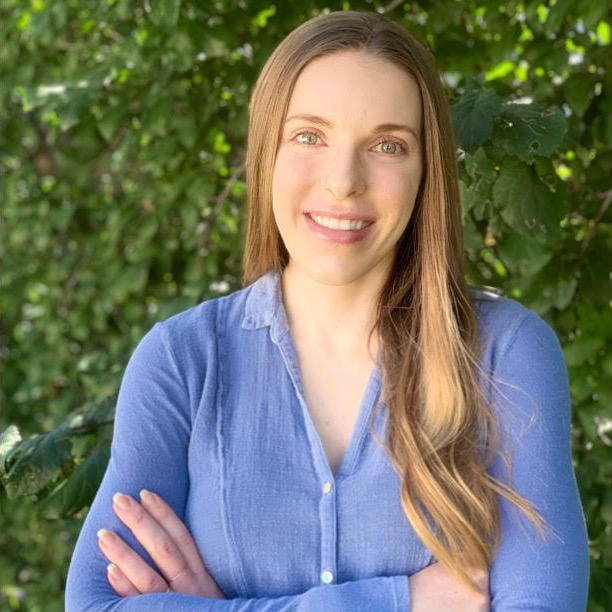
Allison Kalivas, MA, LMFT, works with adults and couples on trauma recovery, grief, and relationship patterns. She draws on EMDR and Emotionally Focused Therapy to help you understand what happens when conflict takes over and practice different ways of communicating and responding.
Explore Allison’s approach: https://catalystcenterllc.com/allison-kalivas-ma-lmft/
You don’t have to know exactly which kind of support you need before reaching out. Book a free 15-minute call with Jenn, our intake coordinator, to talk about what you’re looking for, discuss current availability, and get set up with the right next step at The Catalyst Center.
Book a Free 15-Minute Call With Jenn
Related reading and sources
For broader discussion, see Allison Kalivas’s current Catalyst guide, “Signs You’ve Been Triggered: A Practical Guide to Recognizing Trauma Symptoms”: https://catalystcenterllc.com/signs-youve-been-triggered-recognizing-trauma-responses/
[1] U.S. Department of Veterans Affairs, National Center for PTSD. Trauma Reminders: Triggers. https://www.ptsd.va.gov/understand/what/trauma_triggers.asp
[2] U.S. Department of Veterans Affairs, National Center for PTSD. Coping with Traumatic Stress Reactions. https://www.ptsd.va.gov/gethelp/coping_stress_reactions.asp
[3] National Institute of Mental Health. Post-Traumatic Stress Disorder. https://www.nimh.nih.gov/health/publications/post-traumatic-stress-disorder-ptsd