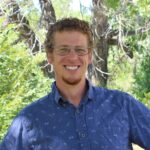

Gabriella Potter, PsyD
Postdoctoral Fellow
Specialty Areas
- Trauma & PTSD
- Mood Disorders and Depression
- Grief and Loss/Sudden Traumatic Loss
- Gender, Identity, and Relationships
- Neurodivergence, Autistic Burnout and Late Diagnosis
- Anxiety
Gabriella Potter, PsyD, is a postdoctoral fellow at The Catalyst Center in Denver, specializing in grief and loss, trauma, and identity exploration — including gender, sexuality, and relationship structure. They work from an existential and relational lens, helping clients make sense of what’s happened to them and move toward a life that feels meaningful, purposeful, and value-aligned.
“Helping clients make sense of what’s happened to them and move toward a life that feels meaningful, purposeful, and value-aligned. “
Gabriella integrates EMDR, Acceptance and Commitment Therapy, and parts work, along with specialized training as a Comprehensive Grief Care Provider. They see individuals, couples, and families across the lifespan, with particular care for queer and trans clients, neurodivergent adults navigating burnout and late diagnosis, and people standing at a crossroads. Gabriella believes grief and trauma are healed in relationship — and that therapy should make your world feel bigger, not smaller.
What Clients Can Expect
Gabriella is, above all, someone who wants to understand you. Their questions aren’t there to fill the hour — they’re there to open something up, and to follow the threads running underneath what you’re describing. Sessions are warm and reflective, with room for humor, and Gabriella can be more direct and challenging when that’s what the moment calls for.
Most people arrive able to explain their patterns in detail while feeling strangely disconnected from them. Gabriella helps you get underneath the explanation — gently enough that it doesn’t flood you, but far enough that something can finally shift. They pay particular attention to shame you may be carrying that was never yours to begin with, naming the family messages and social structures that shaped how you learned to see yourself.
Sessions open with a check-in, spend the middle going deeper, and close with time to reground — so you leave steady enough to go live your life.
Pacing is calibrated to you. If you arrive wanting to fix it all immediately, Gabriella will help you slow down enough to get somewhere real. If change itself feels frightening, they’ll offer steady, gentle encouragement — we can do this together, and we’ll take the time it takes.
 Grief & Loss
You don’t have to move on to move forward
Grief is where Gabriella began. In hospice, they sat with families both before and after a death; later, at Judy’s House, they supported grieving children, teens, and caregivers. They hold specialized training as a Comprehensive Grief Care Provider and stay actively connected to grief care networks in Colorado.
We live in a grief-phobic culture — one that quietly tells people to keep going, stay functional, and not metabolize what happened so they can keep being whoever everyone needs them to be. Gabriella considers that both unfair and deeply unjust. Their work offers the opposite: a place where grief doesn’t have to be set aside, where you can look directly at what you’ve lost and let it change you.
Many people arrive months or years after a loss, having managed well enough until suddenly they couldn’t. Gabriella works with anticipatory grief, sudden and traumatic loss, and the losses that don’t always get named as grief — estrangement, divorce, a diagnosis, the future you thought you were going to have.
The goal isn’t to stop grieving. It’s to carry your grief in a way that still leaves room to choose your life.
Trauma Therapy & EMDR
Most of what hurts us happens in relationship with other people — which, in Gabriella’s view, is exactly why so much of our healing has to happen there too. Sometimes for the first time in someone’s life, Gabriella is a consistent, caring person who is safe to get attached to.
Gabriella is trained in EMDR and builds toward it slowly. Long before any trauma processing begins, you’ll spend time on steadying your nervous system and finding some ground to stand on. Along the way Gabriella might ask which parts of you got cut off from what happened, and which parts feel like they have to hold all of it, all the time. You will never be thrown into the deep end of your own healing.
People often arrive after functioning well for a long time — sometimes years — and then hitting a wall. Over time, clients tend to notice more compassion toward themselves, more understanding of the parts that got them through, and the sense that their past is no longer a single story they’re tethered to.
 Gender, Sexuality & Relationships
Before becoming a therapist, Gabriella worked on a crisis line for LGBTQ+ youth. They’ve since done gender health work in medical settings and continue to support people exploring gender, sexuality, and the shape of their relationships — including clients who come in for something else entirely and, well into the work, mention a part of their identity they’ve been quietly questioning for years.
Exploration doesn’t require a conclusion. Gabriella holds the open-ended version of these questions — who am I, what do I want, what actually matters to me — without pushing toward a particular answer or timeline. Much of the work is separating what’s genuinely yours from what the world told you to be.
Gabriella is Gottman Level 1 trained and keeps a small couples caseload so each one gets real attention. They’re most drawn to queer and trans couples, partners in conversation about monogamy and non-monogamy, and couples rebuilding after infidelity who are working out what comes next. In the room, they track what’s underneath the argument: what each person learned about closeness long before this relationship, and how those lessons keep resurfacing.
They also work with parents of children and teens navigating gender identity, holding both truths at once — this is genuinely hard, you’re allowed to grieve what you imagined, and your family will keep going after this.
Autistic Burnout & Late Diagnosis
You’ve been holding it together for a long time. Maybe decades. And then, at some point, you couldn’t anymore — and the advice you got was some version of just push through or just unmask, neither of which helps much when you don’t yet know what either would actually look like.
Gabriella starts with the burnout itself, which has usually been building for years and has become genuinely unsustainable. From there, the question becomes what a more livable life looks like: working with your brain rather than against it, identifying the accommodations you need, and building the language to ask for them.
Much of this comes up with adults who masked well into their thirties, forties, and beyond — often people raised as girls, who learned early that fitting in was a performance they were responsible for maintaining.
Gabriella has worked with autistic children in developmental pediatrics and with neurodivergent clients of all ages in gender health settings.
If you want diagnostic clarity — particularly when ADHD, autism, trauma, and anxiety can look so much like each other — The Catalyst Center offers collaborative, neurodiversity-affirming psychological assessment, including a brief adult autism protocol.

Education
- Psy.D., Clinical Psychology, University of Denver, Graduate School of Professional Psychology, Denver, CO, 2026 — Specialty Focus: Grief and Loss
- M.A., Clinical Psychology, University of Denver, Graduate School of Professional Psychology, Denver, CO, 2023
- B.A., Psychology and Women’s, Gender, and Sexuality Studies, Magna Cum Laude, Brandeis University, Waltham, MA, 2018
Certifications and Advanced Training
- Certified Comprehensive Grief Care® Pathfinders Provider, Judi’s House, 2024
- Level 1 Gottman Method Couples Therapy, The Gottman Institute, 2024
- Level 1 Crisi Wartegg System, Wartegg Drawing Completion Test, Southern California Center for Collaborative Assessment, 2024
- EMDR Basic Training, Levels 1 and 2, Trauma Therapist Institute, 2022
Clinical Training and Publications
- APA-Accredited Pre-Doctoral Psychology Internship, Kaiser Permanente Gender Health Track, Denver, CO, 2025–2026
- Authentic Connections Therapy and Wellness, Denver, CO, 2024–2025
- Judi’s House, Aurora, CO, 2023–2024
- Ardent Grove Foundation, Denver, CO, 2022–2023
- Center for Valued Living, Aurora, CO, 2021–2023
- University of Denver Professional Psychology Clinic, Denver, CO, 2021–2025
Publications
- Doctoral Paper: Lost in Loss: A Supportive Handbook for Teens Grieving the Suicide of a Loved One, University of Denver Graduate School of Professional Psychology, 2026
Let’s Get Started
Reaching out is often the hardest part. If you’ve read this far, something here probably resonated — and that’s worth paying attention to.
Starting therapy is a big decision, and we want it to feel like the right one. That’s why we start every new client with a free introductory call — a low-pressure way to find out whether you and Kevin are a good fit before anything else.
However you’d rather start is fine. Call us at 720-675-7123 and press “1,” or fill out the form to request a time — whether you’re ready to book or just have questions. You don’t have to have it all figured out to begin.