
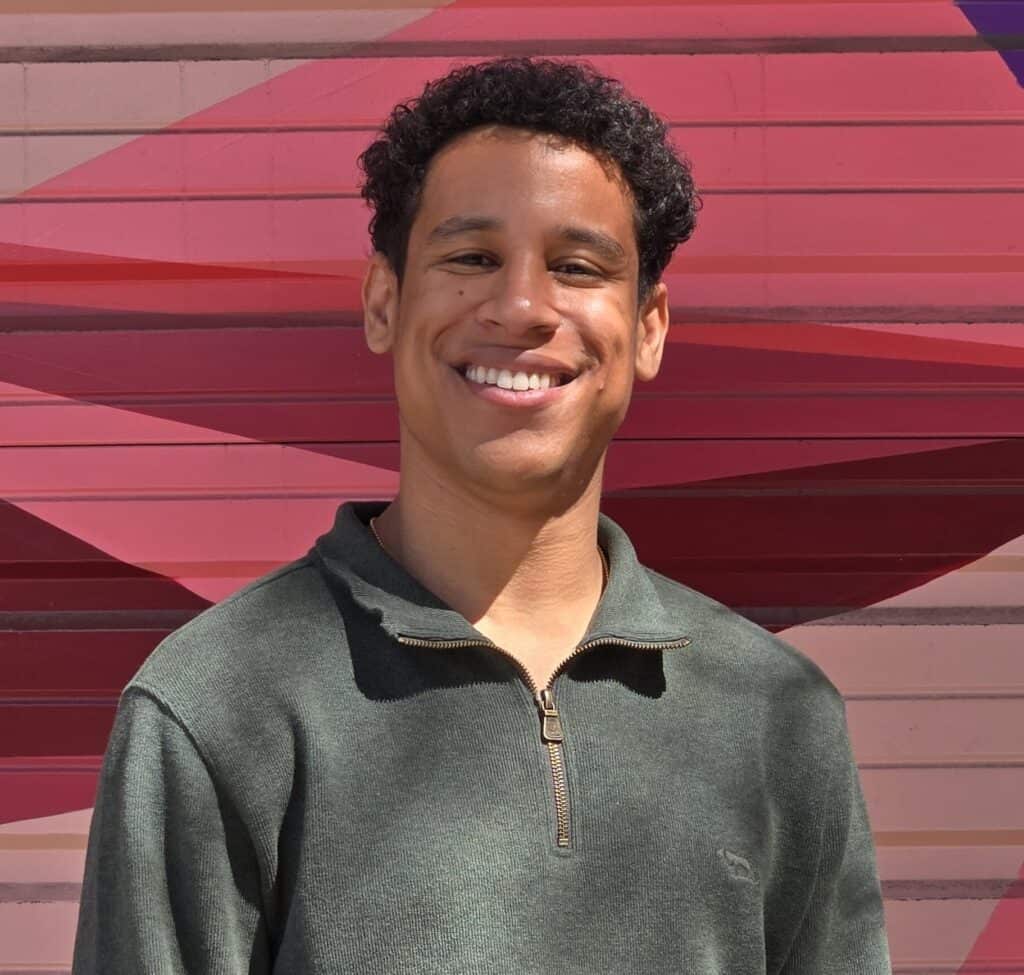
Kevin Diaz, MA
Advanced Graduate Student Clinician
Specialty Areas
- Trauma & PTSD
- Mood Disorders and Depression
- Self-esteem and Confidence
“a deep curiosity about the “why” behind how people think, feel, and respond eventually pulled him toward the work of actually helping people understand themselves.”
Kevin is an integrative therapist who draws on acceptance and commitment therapy (ACT), psychodynamic, EMDR, and cognitive behavioral approaches, tailoring his work to the person in front of him. He specializes in trauma and PTSD, self-esteem and confidence, and mood disorders, and brings particular warmth to his work with adults across the lifespan, including older adults. He sees clients under the clinical supervision of Dr. Joey Tadie.
What Clients Can Expect
Sessions with Kevin tend to feel warm, safe, and genuinely collaborative, with room for humor when it fits. His goal is for therapy to feel like your space—a place where you have agency, even when it feels in short supply everywhere else. Part of how he builds that is by creating a relationship where you can push back, disagree, and say, “No, that’s not quite right,” and be met with openness rather than defensiveness.
He tends not to assign homework unless that’s something you find helpful, and he won’t pretend to be an expert in an approach he doesn’t practice. If a particular method isn’t the right fit for him, he’ll say so honestly and help you think through what you actually need. What stays constant is a steady, patient presence and an honest read of what will help—never a one-size-fits-all checklist.
 Trauma & PTSD
Healing the lessons you were never meant to learn
Kevin understands trauma as the source of the survival strategies and defenses that once kept you safe but now create distress. So much of what weighs on people, he’s found, traces back to lessons they were forced to learn through no fault of their own. His work begins there—gently addressing the root rather than only managing the symptoms on the surface.
He works with intergenerational and generational trauma, interpersonal and childhood trauma, and supports adult survivors of sexual abuse. He also works with clients whose histories of substance use are tied to underlying trauma. Currently completing his training in EMDR, Kevin pairs evidence-based trauma processing with a relational, integrative style.
As a male therapist, he is especially mindful of clients whose experiences of harm involved men, and he sees the steady warmth of the therapeutic relationship as deeply reparative. What he loves most is watching resilience emerge—the post-traumatic growth that becomes possible when clients begin to see their own strength reflected back to them.
Mood Disorders & Depression
A steady presence through the lows
Kevin brings real patience and calm to his work with depression and mood disorders, including bipolar disorder. He knows these can be some of the hardest experiences to sit with—and that clients living with them have often had therapy experiences that left them feeling unseen or stuck in a cycle of hopelessness.
He doesn’t arrive with an agenda or a promise to “fix” anything. Instead, he offers consistency and a willingness to stay, modeling that someone can be reliably present through the dips. He honors the reality that brain chemistry doesn’t always cooperate, and that part of healing can mean learning to recognize a low, communicate it, and ride it out with more self-compassion.
Running through this work—and much of what Kevin does—is grief and loss. He sees grief woven through trauma, self-worth, and mood: grieving the past, grieving what was hard to hold, and sometimes grieving the version of yourself you hoped you’d get to be. Naming and processing that loss, he’s found, can quietly change everything.
 Self-Esteem & Confidence
Finding your voice and learning to take up space
Kevin works especially well with people who struggle with low self-esteem, difficulty with confrontation, and the quiet exhaustion of people-pleasing—often a role they were placed into long before they chose it. Many of his clients have felt, in one way or another, that their confidence was taken from them.
His approach is to build enough safety that change can actually happen. He’s watched clients who once found it nearly impossible to set a boundary grow into people who do it with ease—one client eventually marveling that she couldn’t remember why standing up for herself had ever felt so hard. That kind of shift, practiced first within the therapy relationship, is meant to carry into the rest of your life.
Because Kevin doesn’t push an agenda, clients tend to feel free to find their own footing. The work is collaborative, paced to your readiness, and grounded in the belief that reclaiming your voice is something you build block by block.
Hear From Kevin
For me, healing can be one of the most beautiful and complex parts of therapy. I’m always honored to be invited into a client’s story of healing. I believe healing often happens when someone is able to build insight around the wounds they’ve carried, grieve the pain those wounds have caused, and begin to recognize the strength that has helped them survive. From there, therapy can support someone in building a life that feels more connected, meaningful, and of their own choosing.
I’ll be honest about how my view has changed. Earlier in my development as a therapist, I had a more impatient view of healing. I believed that if I could just find the right words, the right intervention, or the right way to explain something, then healing would quickly follow. What I came to understand is that healing is rarely that simple. If it were only about being told how to fix something, many people would have already found those words on their own.
In our work together, I don’t view healing as a list of instructions or a clever formula. Instead, I see therapy as a space where we can slow down, understand what has hurt, make room for grief, and also notice the parts of life that still feel meaningful. My hope is that our work together helps create brighter and lighter days than the ones you had before, and that you can feel proud of the effort you’ve taken to heal.
“I value when therapy becomes a place where pain can be held — but where awe, humor, connection, and joy are also welcome.”
This work is meaningful to me because therapy isn’t only about the grand moments of change, although those moments matter. Some of the most meaningful parts of my work happen in the smaller human moments: when a client shares a joy, a proud moment, a laugh, or a niche interest they love — those moments matter just as much as the breakthroughs.
~ Kevin Diaz
Education & Training
- Doctoral training in progress — University of Denver, Graduate School of Professional Psychology (GSPP)
- B.A. in Psychology (career transition from a background in business and marketing)
- EMDR training — currently in progress
- Integrative orientation — acceptance and commitment therapy (ACT), psychodynamic, and cognitive behavioral approaches
- Clinical experience in community mental health and integrated medical settings, working with adults across a range of presenting concerns
- Sees clients under the supervision of The Catalyst Center’s licensed clinical staff
Let’s Get Started
Reaching out is often the hardest part. If you’ve read this far, something here probably resonated — and that’s worth paying attention to.
Starting therapy is a big decision, and we want it to feel like the right one. That’s why we start every new client with a free introductory call — a low-pressure way to find out whether you and Kevin are a good fit before anything else.
However you’d rather start is fine. Call us at 720-675-7123 and press “1,” or fill out the form to request a time — whether you’re ready to book or just have questions. You don’t have to have it all figured out to begin.