
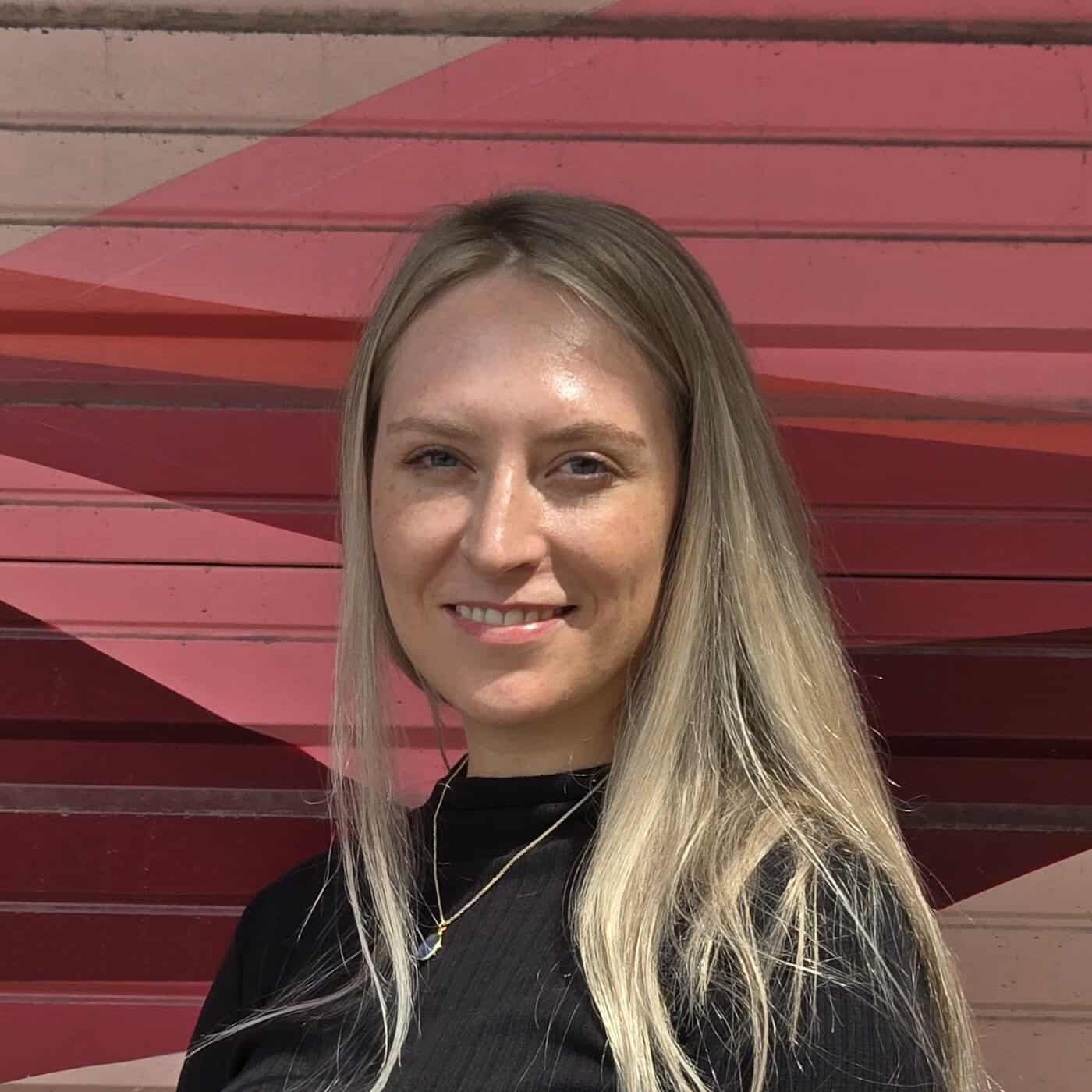
Ana Clements-Benedict, PsyD
Postdoctoral Fellow
Specialty Areas
- Relationship and Attachment Issues
- Mood and Anxiety
- Men’s Mental Health
- Life Transitions and Adjustment
- Personality Disorders and Complex Presentations
- Adult children of narcissistic parents
- Long-standing patterns in relationships that haven’t shifted with previous therapy
- Emotion dysregulation and comprehensive DBT
Some people arrive in therapy with a clear problem. Others arrive knowing only that something is off — that they aren’t getting what they want out of their life and can’t say why. Dr. Ana Clements-Benedict works especially well with the second group. A psychodynamic and relational therapist in Denver, she sees depression and anxiety the way a doctor sees a fever: real, worth taking seriously, and not yet the whole story.
“The more clearly you can see yourself, the more freedom you have to choose.”
Her training includes comprehensive DBT, EMDR, ERP, and Gottman couples work, but the through-line is curiosity — about how you came to be where you are, and what would change if you understood it. She works with adults 18 and older.
What Clients Can Expect
Understanding first, then change
Ana spends the first few sessions genuinely getting to know you — not just the problem that brought you in, but your life as it is now and as it has been. She will usually share her working understanding of what’s going on by around the third session. Those early sessions are your chance to decide whether Ana is the right therapist for you.
Sessions are mostly client-led. Ana isn’t working from an agenda or a worksheet, and she won’t tell you what to do. That takes some getting used to if you arrived wanting directives. Instead, she reflects back what she’s hearing, clarifies, and asks the questions you may not have thought to ask yourself. When something harder surfaces, she steps in: grounding you if you’ve started to check out, slowing the pace, offering concrete tools when having something to hold onto helps. If safety is ever a concern, she’ll take charge of the session and address it directly. Otherwise, you set the direction — including the sessions where you arrive with nothing particular to say.
Clients tend to describe her as deeply caring and compassionate — and as someone who will be honest with them. She isn’t going to agree with you just to keep the peace. If she sees something you don’t, she’ll share her perspective.Pacing is something you two decide out loud, and she’ll ask directly how it feels — she isn’t a mind reader, and doesn’t pretend to be. If she’s gotten something wrong, she wants to hear it.
 Relationship & Attachment Issues
Most of what brings people to therapy has a relational thread running through it. Ana works with adults caught in patterns they can see but can’t seem to interrupt — the same argument in every relationship, the same distance from family, the same difficulty trusting that closeness will hold.
She also works with grief that isn’t about death. Losing a relationship you counted on, or the version of a parent you needed and never had, is a real loss — and it often goes unmourned because nothing about it looks like mourning. Attachment injuries from childhood, ruptures between adults, and the slow erosion of a partnership all belong here.
Ana spent a year of her doctoral training in a couples therapy seminar at the University of Denver and completed Gottman Method Level 1. She’s worked with partners navigating the identity shifts that come with new parenthood — figuring out who you are to each other now that you’re also somebody’s parents.
Much of this happens in the therapy relationship itself. Ana welcomes clients who can tell her they’re frustrated with her, or that something isn’t landing. Those moments are usable, not problems to smooth over. Clients often describe better relationships with the people in their lives, and a noticeably better one with themselves.
Mood & Anxiety
Relief from the symptom, and an answer to why it’s there
When a client says they have depression, Ana’s first question is whether that’s the problem or the evidence of one. Both parts matter to her: she takes the suffering seriously and wants it to ease, and she wants to understand what produced it.
This changes what treatment looks like. Sometimes it takes a couple of months to understand what’s actually wrong, and that isn’t a sign therapy is failing. That process is the treatment. Ana will say plainly that she’s a poor fit for someone who needs an answer in three sessions, and a good fit for someone willing to spend some time.
She works well with depression that has resisted explanation, with performance anxiety and perfectionism, and with people told their symptoms are purely chemical who never quite believed it. She trained for a year at a practice specializing in anxiety disorders, using acceptance-based and exposure-based approaches with adults and adolescents.
She’s also skilled with clients who understand themselves well on paper and can’t feel much of it — where thinking has become the way around emotion rather than the way into it. She’ll use concrete tools when they help: mindfulness, structure, skills for a feeling that gets too big to hold. She just won’t stop there if there’s more to find.
 Men’s Mental Health
Two men show up in Ana’s office often. The first isn’t sure about therapy at all and came because someone asked him to. The second is here because his partner is exhausted from feeling shut out, and he doesn’t know how to give her what she’s asking for.
Ana is a good first therapist for a skeptic. She’ll meet you in an intellectual register, which for a lot of men is the door that opens first — thinking about something before feeling it is a reasonable place to start, not something to apologize for. She won’t ask you to emote on cue. She also worked in the corporate world before moving into psychology, and she knows the environments many of her male clients spend their days in.
She works with anger without treating it as a character flaw. Anger is frequently the one emotion that got through, and when it becomes the only available response, the question isn’t how to suppress it but what it’s protecting.
What men notice over time is less dramatic than they expect and more useful: more room between a feeling and a reaction, more capacity to be alone with themselves without staying in motion, and conversations at home that go somewhere new.
Personality Disorders & Complex Presentations
Some people have been through several therapists and left each one with the sense that they were too much, too intense, or too difficult. Others are on the receiving end of a personality that has shaped their entire life — a parent, a partner, a sibling — and have never had a name for what they lived through.
Ana works with both. Narcissistic presentations don’t rattle her, and she’s comfortable with adult children of narcissistic parents, a group that often struggles to find a therapist who will say plainly what happened to them.
Her training here runs deeper than most at this stage of a career: comprehensive DBT at a Linehan Board Certified clinic, a predoctoral internship at a psychiatric hospital treating severe and complex presentations, and specialized training in personality assessment. Her doctoral paper examined how object relations theory and DBT can be used together in individual therapy.
She’s direct about fit. Depending on severity, weekly individual therapy may not be the right level of care, and she’ll say so rather than let someone spend a year in something that was never going to be enough. When it is the right fit, what she offers is steadiness — the willingness to sit with what you can’t yet tolerate on your own.

Education and Certifications
Education
- Predoctoral Psychology Internship: Baylor College of Medicine, The Menninger Clinic, Houston, TX, 2025–2026
- Psy.D., Clinical Psychology, University of Denver, Graduate School of Professional Psychology, Denver, CO, 2026 (APA Accredited)
- M.A., Clinical Psychology, Pepperdine University, Graduate School of Education and Psychology, Los Angeles, CA, 2022
- Graduate Studies, Psychology, Columbia University, Teachers College, New York, NY, 2020
- B.A., International Affairs and Economics, The George Washington University, Washington, D.C., 2016
Certifications
- EMDR Basic Training, Levels 1 and 2, EMDRIA-Approved, Kase & Co., 2024
- Gottman Method Couples Therapy, Level 1, 2024
- CAMS-Care Foundational Training (Collaborative Assessment and Management of Suicidality), 2022
- Crisis Counselor Certification, Crisis Text Line, 2019
Clinical and Advanced Training
Clinical Training
- Predoctoral Psychology Intern, The Menninger Clinic / Baylor College of Medicine — individual psychotherapy, personality and projective assessment, and interpersonal process groups with adults experiencing complex and severe psychiatric presentations
- Doctoral Extern, Ardent Grove Foundation, Denver — individual, couples, and family therapy using an integrative, trauma-informed approach; collaborative therapeutic assessment
- Doctoral Extern, Vivid Psychology Group, Englewood — ACT, ERP, and relational approaches with adults and adolescents presenting with anxiety, OCD, depression, PTSD, and substance use
- Doctoral Extern, Front Range Treatment Center, Centennial — comprehensive DBT (individual therapy, skills group facilitation, and phone coaching) at a DBT-Linehan Board Certified clinic
- Graduate Student Trainee, Professional Psychology Clinic, University of Denver — integrative, psychodynamic, and couples therapy across three years of specialized seminar training; psychological and cognitive assessment
Advanced Training
- Eating Disorder Treatment, year-long training program, The Eating Disorder Foundation, 2024–2025
- Exposure and Response Prevention (ERP): The Gold Standard in Anxiety and OCD Treatment, 2024
- ACT Basics Training, 2024
- MOXO d-CPT Training, 2024
Publications
- Doctoral Paper: Integration of Object Relations and DBT in Individual Therapy
Let’s Get Started
Reaching out is often the hardest part. If you’ve read this far, something here probably resonated — and that’s worth paying attention to.
Starting therapy is a big decision, and we want it to feel like the right one. That’s why we start every new client with a free introductory call — a low-pressure way to find out whether you and Kevin are a good fit before anything else.
However you’d rather start is fine. Call us at 720-675-7123 and press “1,” or fill out the form to request a time — whether you’re ready to book or just have questions. You don’t have to have it all figured out to begin.