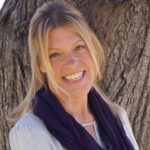
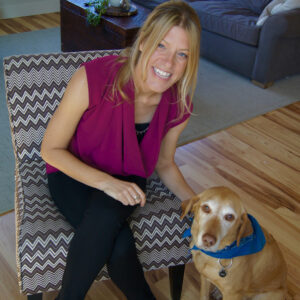
Sarah Long, PsyD, LCP
Licensed Clinical Psychologist
Certified Psychedelic-Assisted Therapy Provider
Lead for Assessment, Eating Disorders, and KAP Teams
Specialty Areas
Trauma & PTSD
Eating disorders
Grief & loss
Spiritual crisis
Athletes & first responders
My Approach to Psychedelic Work
I came to ketamine-assisted psychotherapy (KAP) because I kept hitting a ceiling in traditional therapy. Not with every client — but with the ones carrying the deepest wounds, the ones who’d already done years of meaningful therapy and still felt something important just out of reach.
“KAP opened a door I didn’t know was there. The medicine creates a window — the nervous system softens, and something that was buried becomes accessible in a way it simply wasn’t before.”
The way I understand this work is straightforward: the medicine creates a window. The nervous system softens. The default mode network quiets. And in that opening, something that was buried — a belief, a memory, a part of you that learned to stay hidden — becomes accessible in a way it simply wasn’t before.
I work from a bio-psycho-social-spiritual framework, which means all of you matters here. Not just your symptoms or your history. Your relationships, your inner world, your physiology, your sense of meaning, your grief. I often integrate KAP with EMDR and Internal Family Systems, following whatever thread your system most needs to follow.
Psychedelic-assisted therapy, including ketamine-assisted therapy, is not a quick fix. The journey itself can be profound. But lasting change lives in what happens after — in the integration, the meaning-making, the slow metabolizing of what arose. That’s where I put my attention. That’s where the real healing is.
Who I Work Best With
The clients I work best with in KAP aren’t defined by how much they’re suffering — some are in significant pain, acute grief, deep trauma. What they share is something harder to name: a willingness to turn inward. A sense, even if it’s faint, that the answers aren’t outside them. And an understanding that the journey itself is only part of the work.
If that’s where you are, we might be a good fit.
I’m particularly drawn to working with people whose lives involve high stakes, intensity, and a kind of hardship that doesn’t always get named in traditional therapy settings. That includes:
Extreme & mountain athletes
Navigating trauma, catastrophic injury, grief, or the particular identity disruption that happens when the mountains or oceans take something — or someone — from you.
Veterans, first responders, and their families
Including the spouses and adult children who are carrying a weight that nobody thinks to ask about.
People with eating disorders
Who are tired of traditional treatment approaches, ready to look at what’s underneath — the trauma, the roots, the thing the eating disorder has been protecting. The entry point is curiosity about what’s driving it — a willingness to look at the root, not just the symptom.
Grief and loss
Especially the kind that’s complicated, sudden, or happens inside a community that doesn’t always make room for it.
Spiritual crisis and existential questions
Loss of meaning, dark nights of the soul, the kind of searching that doesn’t have a clinical name but is very, very real.
KAP-Specific Focus Areas
Trauma & PTSD
Including complex, developmental, and single-incident trauma that hasn’t fully responded to traditional approaches.
Eating disorders
Addressing the underlying trauma, beliefs, and parts that drive disordered eating, not just the symptoms.
Grief & loss
Particularly traumatic, sudden, or disenfranchised grief, including loss within mountain and high-risk sport communities.
Burnout & compassion fatigue
Especially for healthcare workers, first responders, and those whose nervous systems have been running on empty for too long.
Spiritual crisis & existential questions
Loss of meaning, identity disruption, dark nights of the soul.
Athletic identity & injury
For extreme and mountain athletes navigating the psychological aftermath of catastrophic injury, loss of sport, or what happens when things go wrong out there.
My Integration Approach
The journey opens something. Integration is how you make it yours.
KAP is rarely a single session — it’s typically a series of journeys, each building on what came before. I work with both low-dose psycholytic protocols, where you remain more conversational and present, and higher-dose psychedelic sessions, where the experience goes deeper and the inner work becomes less linear. The approach is tailored to where you are and what the work calls for.
In the days following each session, the nervous system is primed and more open than usual. Integration sessions during that window are a mix of following what arose organically and bringing specific tools to bear — IFS parts exploration, EMDR processing, mindful self-compassion — depending on what your system is ready for.
Between sessions, I’ll often offer journaling prompts, grounding and visualization practices, mindfulness, and intuitive practices to help you stay in relationship with what came up. These are invitations, not prescriptions. We move at your pace, in the direction your healing actually wants to go.
Hear from Sarah
“I believe, without reservation, that healing is possible. Even when it’s been a long time. Even when it’s been hard. Even when you’re not sure yet.”
To be honest, ketamine as a healing medicine was not where I expected to land. When I first started exploring psychedelic-assisted therapy, I was most excited about MDMA and psilocybin — the research was compelling, the clinical potential felt enormous. Ketamine I was skeptical of. I associated it with either the hospital setting or a party drug, not a healing tool.
That changed years ago during my first ketamine journey in the experiential component of my certification training. What happened in that session — the insights, the release of things I didn’t know were still running in the background, the window that opened afterward — wasn’t something I could have accessed through talk therapy alone. Stuck grief started to move. My burnout began to lift. My work felt meaningful again. I came out the other side with a renewed belief in healing, both for individuals and something larger.
That experience is part of why I show up the way I do in this work. I don’t think a psychedelic-assisted therapist or facilitator can ask clients to go somewhere they haven’t been willing to go themselves. My own relationship with psychedelic medicine is ongoing — not a credential, but a practice. And it has shown me, over and over, that the capacity for healing lives in all of us. Not as a philosophy. As something I’ve witnessed and experienced firsthand.
When things get intense — and sometimes they do — I don’t flinch. I trust that we will come through the other side. That steadiness isn’t a technique. It comes from knowing — through my own life and from sitting alongside clients — that there is another side to the dark places.
I’m not here to heal you. That’s not false modesty — I just truly believe that’s not how healing and growth works. The wisdom and capacity for healing already live in you — even if they’re buried, even if you can’t feel them yet. I hold the belief in your capacity to heal — even when you can’t hold it yourself yet. My job is to protect the container, stay present, and trust the process — the medicine, the relationship, the timing — and to help create the conditions where your own healing wisdom can do what it already knows how to do.
This path asks something of both of us — your willingness to turn inward, and my commitment to staying resourced enough to hold that with you. I take that seriously. I maintain regular consultation, peer support, and my own inner work — because a psychedelic-assisted therapist who isn’t also held cannot hold anyone else for long. And I believe, without reservation, that healing is possible. Even when it’s been a long time. Even when it’s been hard. Even when you’re not sure yet.
I look forward to hearing from you.
Articles and Insights from Dr. Sarah Long
How to Support a Loved One Through Ketamine Therapy
Finding Gratitude When Life Feels Hard
Pet Loss and Healing: What Marley Taught Me

Psychedelic training & education
The trainings below reflect my specific education in psychedelic-assisted therapy — the clinical, experiential, and ongoing learning that directly informs how I show up in KAP sessions.
-
-
Certified Psychedelic-Assisted Therapy Provider, Integrative Psychiatry Institute, 2022
-
Internal Family Systems (IFS) and Psychedelic Therapy, Psychedelic Support, 2023
-
Psychedelic Science Conference, Multidisciplinary Association for Psychedelic Studies (MAPS), 2023
-
Psychedelic Therapy for Eating Disorders, Adele LaFrance, 2024
-
Advanced Experiential Training with Senior Medicine Facilitators, 2025 — approximately 100 hours
-
Plant Medicine and the Spiritual Path: Insights, Healing and Liberation, Spring Washam, 2026
-
Ongoing consultation — Catalyst Center and independent mentors, twice monthly
-
Spirituality-oriented training & study
Healing, in my experience, rarely stays inside clinical boundaries. These trainings reflect the broader spiritual and contemplative education that shapes how I understand consciousness, meaning, and the kind of depth work that psychedelic medicine often opens into.
-
-
Evolutionary Astrology Apprenticeship — Steven Forrest Evolutionary Astrology Center
-
Buddhism, Psychology, and Healing — Jack Kornfield
-
A Year to Live — Spirit Rock Meditation Center, Currently enrolled
-
Energetic Sovereignty and Boundaries — Interconnection, Psychic Horizons, and ongoing study
-
IFS and Enneagram
-
Soul Tarot
-
Let’s Get Started!
Fill out the form to book an appointment with Dr. Sarah Long.
We are committed to helping you find a great fit with a therapist, which is why we offer every new client a FREE initial consultation.
There are two easy ways to connect with us. Call our office at 720-675-7123 and press “1” to be connected. Fill out the contact form to request an appointment or to learn more.