
The Quiet Loneliness Many Men Carry
If you ask most men how they’re doing, you’ll often hear something brief and safe like “busy,” “fine,” or “all good, bro.” Beneath those simple words, however, many men feel far more lonely and disconnected than they are comfortable admitting.
Men often project confidence, stability, and independence, yet these qualities sometimes act more like a protective shell than an authentic reflection of their inner world. While men may not be entirely without connection, many lack the kind of deep, sustaining friendships that help life feel meaningful and manageable.
As men age, distancing patterns can grow quietly. Responsibilities increase, vulnerability feels riskier, and authentic friendships slowly fall away. This raises an important question: Why do so many men drift into isolation—and is there a way out?
Understanding the Friendship Recession
Sociologists describe this decline in meaningful friendship as a “friendship recession.” Across recent decades, men have reported fewer close friends, less time in face-to-face connection, and lower emotional support outside romantic partnerships.
Many men can remember a time when connection came naturally through shared laughter, late-night conversations, or simply being known by someone. Yet somewhere along the way, that ease fades, leaving many without the deep relationships they once relied on.
As careers and family responsibilities expand, friendships often slip to the margins. Cultural expectations around masculinity can reinforce emotional distance by elevating independence, stoicism, and self-reliance. Over time, these expectations teach men that asking for help is weak and that vulnerability is something to hide.
This creates a painful paradox: externally, a man may look steady and successful while internally feeling unfulfilled, insecure, and afraid of being judged for his loneliness.
Loneliness has well-documented mental-health consequences. Research links chronic isolation to higher rates of depression, anxiety, substance use, and even physical illness. According to the U.S. Surgeon General, loneliness can carry health risks comparable to smoking 15 cigarettes a day.
(External source: U.S. Surgeon General Advisory on the Epidemic of Loneliness, 2023.)
Yet reconnecting isn’t only about reducing harm—it’s about reclaiming something fundamentally human. We are wired for belonging, and our well-being thrives in connection.
Why Men Need Brotherhood
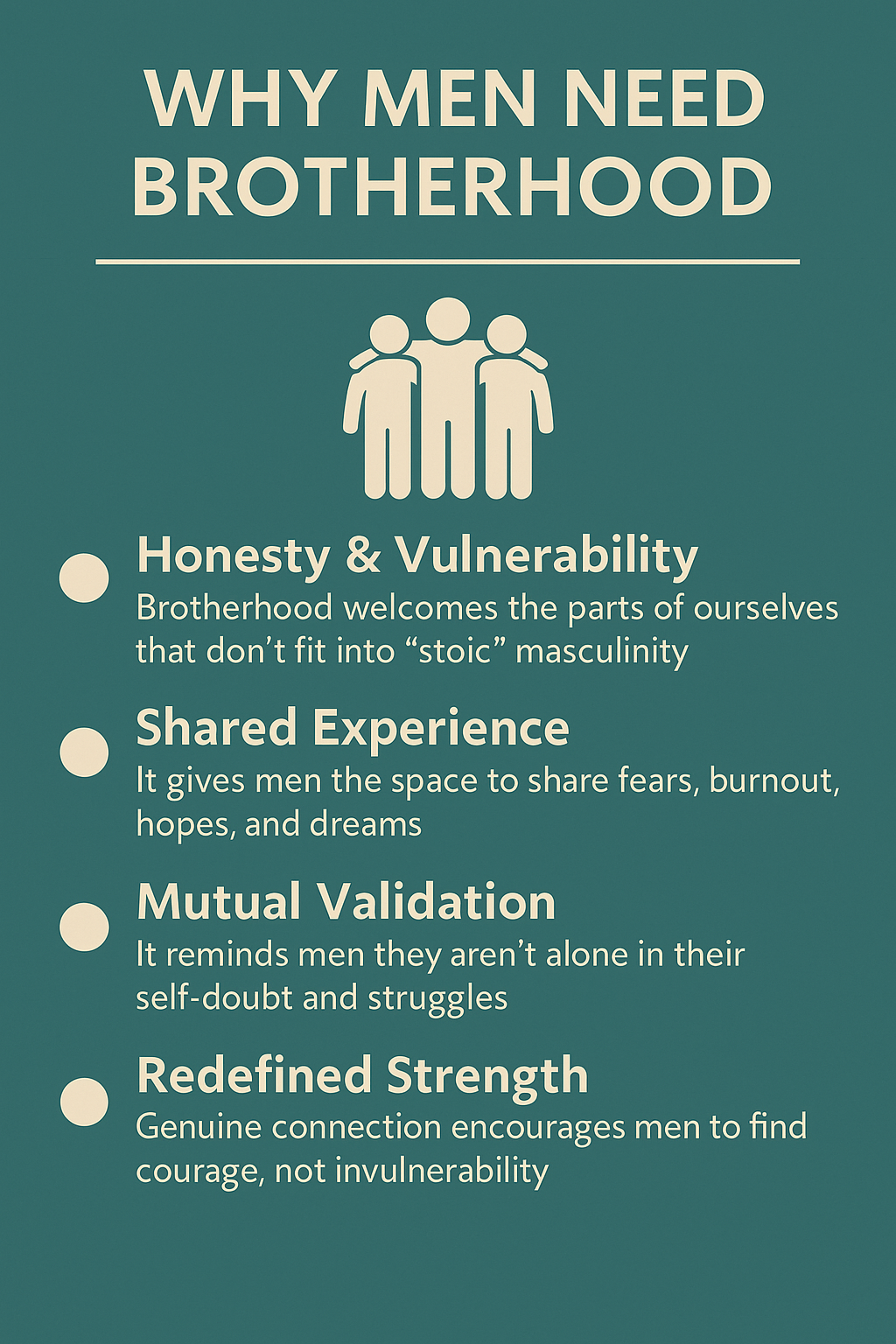
When men find genuine brotherhood—spaces where honesty, vulnerability, and realness are welcomed—it reshapes how they relate to themselves and the world around them.
Brotherhood is not about conforming to narrow ideas of masculinity. Instead, it honors shared experience while also making room for the unique stories men carry. In trusted community, men can finally talk about what rarely surfaces in casual conversation: fear, burnout, dreams, and hope.
However, this kind of bonding has become less common as our lives grow increasingly individual. Personal screens, curated online identities, and siloed roles as professionals or parents can make connection feel optional—even though men often long for it deeply.
A painful truth is that many men feel alone in their loneliness. Recognizing that this experience is widespread can be profoundly validating. When men hear that their peers also question whether they’re good enough, also fear failing their kids, or also feel the ache of disconnection, something softens. Shared vulnerability can quiet the inner critic and open doors to self-compassion.
Healthy brotherhood also serves as a mirror. It reflects strengths and tenderness that men might otherwise ignore or hide. Over time, brotherhood redefines what it means to be strong—not as emotional invulnerability but as the courage to show up authentically.
Rebuilding Connection: Small Steps, Big Shifts
Brotherhood grows in the small moments when we risk being real. From that honesty, something steadier and more human begins to take shape.
Reversing the friendship recession does not require grand gestures. Often, it starts with something simple: sending the text you’ve been avoiding, suggesting lunch, joining the rec league, or inviting someone to watch the game.
Connection always carries risk—risk of rejection, misunderstanding, or feeling exposed. Nevertheless, the reward of belonging and genuine acceptance is deeply worth it. Sometimes, someone has to take the first step, and it might be you.
When you share something real—a fear, a struggle, or even “I’ve missed hanging out”—you create space for others to open up. Authenticity is contagious. One person lowering their guard often gives others permission to breathe and do the same.
These moments can even offer corrective emotional experiences, softening old relational wounds and creating new patterns of trust. Brotherhood, in this way, becomes healing.
A New, More Humane Definition of Strength
True strength is not found in emotional self-containment. Rather, it grows in moments of bold authenticity, compassion, and honest connection. While these qualities may seem at odds with traditional masculinity, it’s worth asking whether old rules truly serve men’s well-being.
A more expansive definition of masculinity might include the willingness to take emotional risks, reach toward others, and let oneself be fully seen. These acts of courage can transform loneliness into connection and emptiness into meaning.
Ready to get started?
If you’re longing for deeper connection or wondering how to rebuild supportive friendships, our ment’s mental health therapist at The Catalyst Center is here to help. You don’t have to navigate this alone.