
 Many people struggle with good sleep hygiene and sleep habits, especially around the holidays. We tend to stay up later, watch movies closer to bedtime, eat later, drink more, and have more added stressors that may impact our sleep. But DON’T PANIC, the good news is that while it is important to sleep, we can survive on very little sleep, at least for a couple days. But anytime we mindfully work on our sleep habits and routine, we will be more successful at going to sleep and staying asleep.
Let’s back up for a moment and talk about why sleep is important. Sleep is not only essential for physical health, it is also important for our overall mental well-being. Getting good sleep helps us naturally manage both anxiety and depression. Our stress response system is impacted by sleep. Getting 6-8 hours of uninterrupted sleep can help us feel our best.
What exactly is happening in our sleep that makes such a difference?
- Hormone levels reset and normalize when we sleep.
- Sleep allows our brain to reset. While we sleep cellular waste is being cleared from our brain tissue allowing us to function optimally. This is the primary reason it helps manage depression and anxiety, when waste builds up, it affects our mental health.
- Our bodies relax. When our joints and muscles are able to relax, our bodies go through an anti-inflammatory restoration period.
- Our Gastro-intestinal system rests so it is able to function properly the next day.
- Our body and mind are integrating and processing the events of the day, this not only includes emotional processing but also integrates what we have learned throughout the day (this is especially important for children and students but no matter our age, we are always taking in new information).
 What gets in the way of sleep? There are many factors that contribute to our sleep cycles being interrupted. Too much screen time may be a big part of the problem. Artificial light activation affects a healthy sleep cycle. Many people tend to be on screens right up until bedtime or use a tv to fall asleep. Especially as many people are working from home, we have a tendency to check up on work emails or calls late into the night as our office and home life boundaries may have blurred. For many, we have gotten away from practicing a healthy winding down period which helps us signal to our mind and body that it is getting closer to bedtime. Having a good sleep routine should include a winding down period about an hour to two hours before bedtime.
Ideas for winding down:
- Read a physical book (no kindles or screens)
- Take a hot shower or bath
- Try yoga or do a mindful, relaxation activity
- Drink a hot beverage or sleepytime tea (you can find many options at any grocery store)
- Use the Calm app
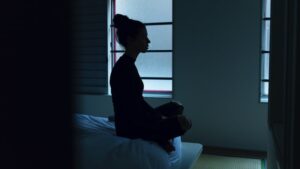 Our sleep environment is also important. Sleeping in a dark, quiet room is best. If you are used to falling asleep to a tv, try using a sound machine or playing quiet, instrumental music. Try to normalize sleeping without a sleep aid medication (these should not be used for more than a few weeks period). Deep breathing exercises can be very helpful when falling asleep. If you are interested in knowing more about the parasympathetic nervous system and how that is beneficial, you can learn more here. If you are working on establishing a good sleep routine and sleep cycle, it can be beneficial to keep a sleep journal. Try different winding down activities and document what works and what doesn’t . Are there other things you did throughout the day that may have impacted your sleep? Are there things you can cut out that could be affecting how long you sleep or if you are able to sleep through the night?
However, if you are trying to adjust your routine, unable to sleep without a sleep aid, or realizing that you are snoring more than usual, it may be time to speak with an expert. Especially if you are wondering if you are experiencing Sleep apnea, which is one of the most under-diagnosed issues, go talk to your PCP. Sleep apnea is absolutely treatable.
For most people, being mindful of sleep habits and working on making adjustments will definitely improve sleep. Just remember, some nights we might lose more sleep than others, it isn’t anything to worry over.
Photo Credits:
Photo by Alexandra Gorn on Unsplash
Photo by Ben Blennerhassett on Unsplash