Integrating Spiritual Practice Into Daily Life: The Flower With a Thousand Petals
Integrating spiritual practice into daily life is often the stage least discussed.
You begin with discipline. Then confusion. Then experimentation. Perhaps even grief. Over time, something softens, and the sharp edges of seeking begin to round out.
And eventually, the question changes. Instead of asking, “How do I meditate better?” you begin asking, “How do I live this?”
That shift marks a profound turning point. Spiritual practice stops being something you do. It becomes something you are.
From One-Pointedness to Wholeness
In early spiritual development, focus is narrow. You concentrate on the breath, a mantra, a posture, a particular state of mind. This one-pointedness builds strength and stability.
But if practice stays isolated from life, it becomes compartmentalized. Meditation here. Life over there.
Eventually, that division begins to feel artificial. Integration means dissolving the boundary between the two.
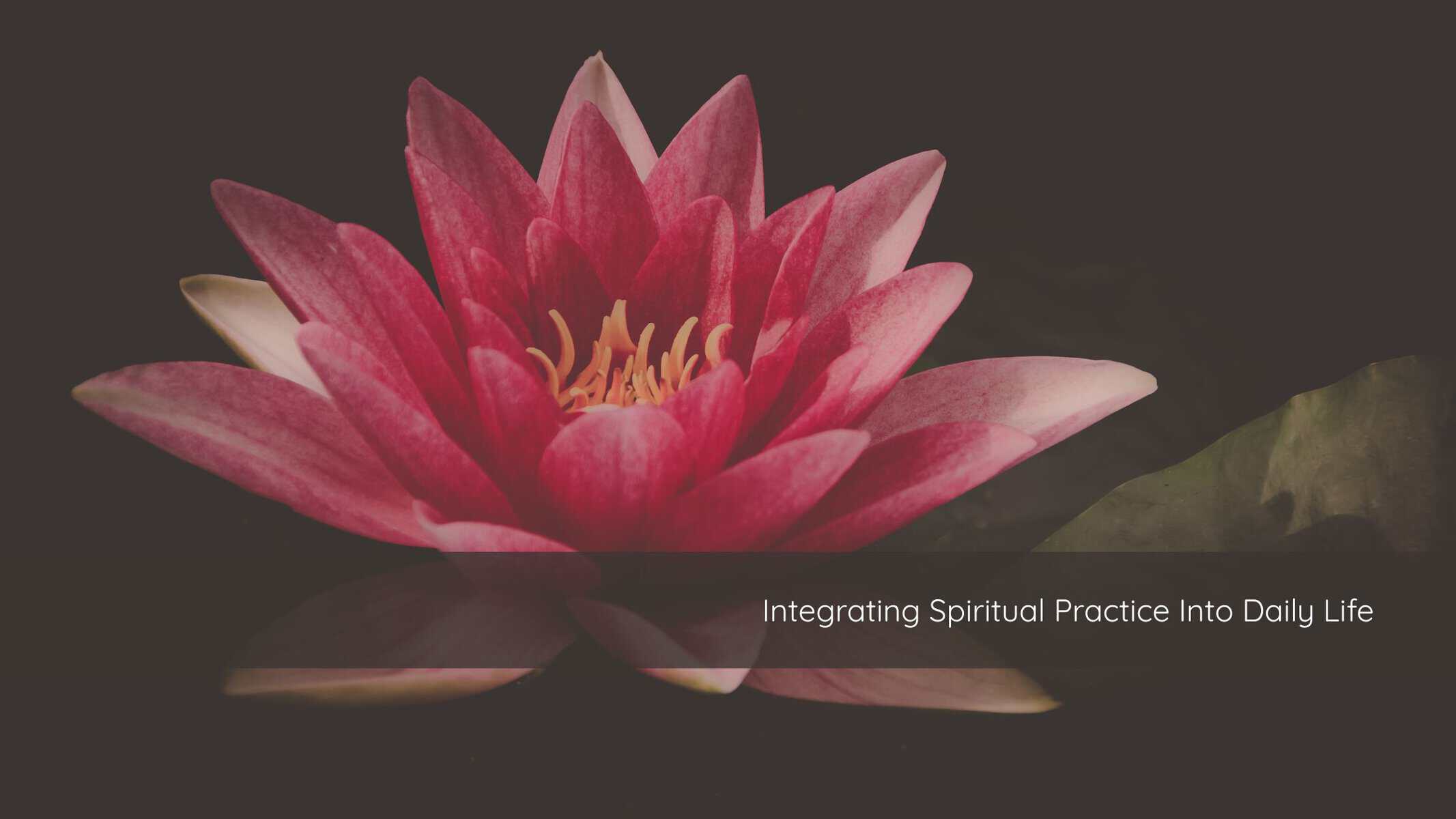
The Flower With Many Petals
Buddhist texts speak of the “ten thousand things” or the “thousand-petaled lotus.” These aren’t literal counts. They’re emotional descriptions of multiplicity.
Imagine a flower with countless petals. Each one is an experience: joy, grief, confusion, work, love, anger, play, boredom, success, failure.
Early on, you may cling to a single petal — calm, or clarity — believing it alone leads to awakening. But maturity reveals something deeper. Every petal leads back to the same root. Integration means engaging each one fully.
Unity Through Multiplicity
This is where many people get confused. You might assume unity requires narrowing experience.
But what if unity emerges through multiplicity instead?
Movement practices like Tai Chi show this beautifully. Coordinating breath, posture, direction, and awareness all at once creates a unified state. The mind focuses not by excluding everything, but by harmonizing many elements.
Life works the same way. When you meet your work, relationships, grief, creativity, and play with full presence, they stop feeling fragmented. Spirituality becomes embodied rather than isolated.
From Escaping Life to Participating in It
There’s a subtle but crucial difference between using spirituality to escape life and using it to deepen your participation in life.
Early on, you might have sought silence instead of noise, peace instead of conflict, clarity instead of confusion. But as growth unfolds, you begin to see that life itself is the teacher.
Grief, once an interruption, becomes a petal — softening you, clarifying your values, deepening compassion. Confusion, once feared, becomes fertile ground for curiosity. Creativity becomes devotion; as Carl Jung suggested, individuation means expressing your unique configuration of psyche.
And then there’s the ordinary. Washing dishes. Driving. Answering emails. Making dinner. These moments become practice. You no longer need dramatic states to feel connected. Presence is enough — and presence is always available.
Signs That Integration Is Happening
You may notice subtle changes: less separation between “spiritual” and “real” life, more emotional flexibility, greater tolerance for ambiguity, more embodied awareness, less urgency to escape discomfort.
You may still meditate. You may still study. But the spirit of practice now extends beyond formal sessions — not because you withdrew from life, but because you entered it more fully.
Gentle Ways to Begin
Choose one ordinary activity — walking, cooking, showering — and do it with full presence.
Include difficult emotions instead of waiting for calm. Say internally, “This too belongs.”
Reflect at the end of the day: Where did I feel most alive? Where did I resist?
And release the search for special states. Integration is quiet. It rarely feels transcendent. Often it simply feels grounded. And grounded is powerful.
The Paradox of the Thousand Petals
When you force unity, you divide. When you accept multiplicity, unity emerges on its own.
You begin by chasing awakening. You end by recognizing it in ordinary moments. The flower was always growing. You simply stopped isolating one petal from the rest.
Integration isn’t a final achievement — it’s a living process. You’ll unify and divide again, forget and remember again. But each cycle deepens understanding.
Spiritual growth isn’t about perfection. It’s about participation. When every experience becomes a petal of the same flower, nothing is excluded.
Joy belongs. Grief belongs. Ordinary life belongs. And you belong within it all.
If You’re Ready to Integrate More Fully
At Catalyst, we support individuals exploring meaning, identity, and spiritual growth alongside anxiety, depression, and life transitions. Sometimes the work isn’t learning a new technique — it’s weaving what you’ve already learned into daily living. If you’re longing for your practice to feel embodied rather than compartmentalized, we’d be honored to support you.