
Is It ADHD or Something Else? Understanding ADHD Mimickers
At The Catalyst Center, we often work with individuals and families who are trying to understand whether ADHD is truly the best explanation for attention and executive functioning challenges — or whether something else may be contributing.
If you or your child struggle with focus, organization, emotional regulation, or follow-through, it’s common to wonder: Is this ADHD — or something else?
In this article, we’ll explore:
- What ADHD actually is (and what it isn’t)
- Common ADHD mimickers that can look very similar
- Why screeners alone can be misleading
- When it makes sense to slow down and look deeper
ADHD Is a Pattern, Not a Single Symptom
ADHD is not defined by occasional distraction or difficulty staying organized.
Clinically, ADHD is understood as a developmental pattern that includes:
- Symptoms across multiple settings (home, school, work)
- Functional impairment, not just frustration
- Onset in childhood, even if recognized later
- A relatively consistent pattern over time
Many people experience executive functioning problems without meeting criteria for ADHD, especially during periods of stress, high anxiety, trauma, burnout, depression, or major life transitions.
Why ADHD Screeners Are Helpful — and Also Incomplete
Screeners can help identify when attention difficulties deserve further evaluation, not a diagnosis.
However, screeners cannot explain why symptoms are happening.
A positive ADHD screener does not differentiate between:
- ADHD
- Anxiety disorders
- Trauma or chronic stress
- Autism spectrum traits
- Depression
- Learning differences
- Sleep deprivation or burnout
Even a positive response to stimulant medication does not clinically confirm ADHD — it simply reflects a change in focus or alertness.
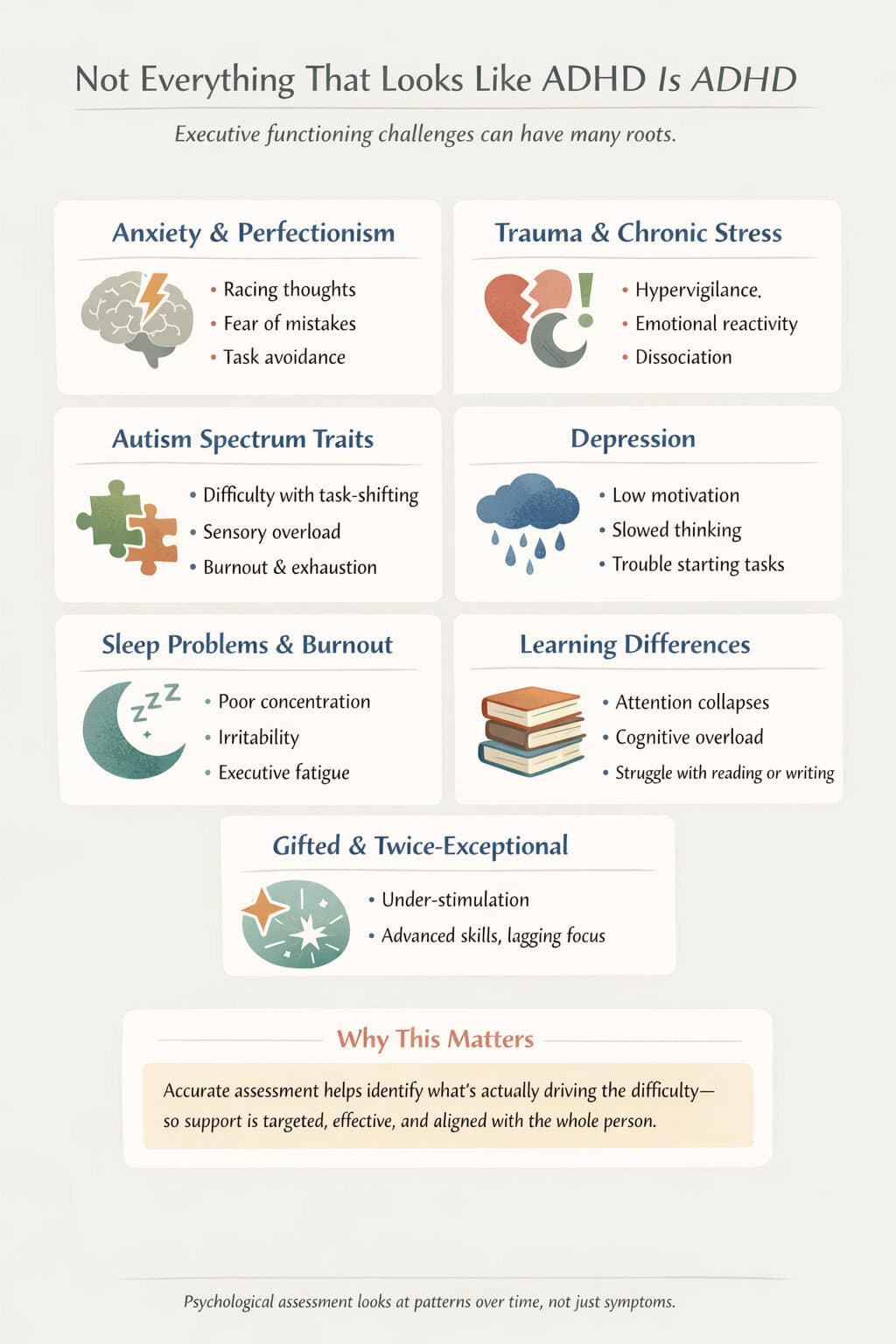
Common ADHD Mimickers We See in Psychological Assessment
In our assessment work, we often see executive functioning difficulties rooted in several overlapping factors. These patterns are frequently mistaken for ADHD, even when a different primary driver is present.
Anxiety and Perfectionism
- Excessive worry and mental overactivity
- Fear of mistakes or failure
- Task avoidance that looks like procrastination
These patterns are often misinterpreted as inattentiveness or poor follow-through.
Trauma and Chronic Stress
- Hypervigilance or impulsivity
- Emotional reactivity
- Dissociation or “spacing out”
- Difficulty with memory and organization
Autism Spectrum Traits and Autistic Burnout
- Shutdowns or withdrawal
- Difficulty with task-shifting
- Sensory overload
- Exhaustion after prolonged masking
These presentations are especially common in adults and late-identified individuals.
Depression
- Low motivation
- Slowed processing
- Difficulty initiating tasks
Sleep Problems
- Poor concentration
- Irritability
- Emotional dysregulation
- Executive functioning strain
Learning Differences
- Attention collapses during reading, writing, or math
- Cognitive overload mistaken for inattention
Giftedness and Twice-Exceptional Profiles
-
- Inattention due to under-stimulation
- Advanced reasoning paired with lagging executive skills
Why ADHD Misdiagnosis Can Be Problematic
ADHD assessment isn’t about labeling every struggle as ADHD —
It’s about slowing down enough to understand what’s actually driving executive functioning challenges, so support can be accurate, meaningful, and effective.
Stimulant medications are evidence-based and often very helpful for ADHD.
However, when ADHD is not the primary driver of symptoms, stimulants may:
- Increase anxiety or panic
- Disrupt sleep
- Heighten emotional reactivity
- Mask underlying trauma, burnout, or neurodivergent stress
This is why accurate, thoughtful diagnosis matters.
A Brief Introduction to Psychological Assessment
Psychological assessment helps clarify what’s actually driving executive functioning challenges and ADHD-like symptoms.
At The Catalyst Center, we often work with clients and families who want to understand whether ADHD is the right explanation — or whether anxiety, trauma, autism, learning differences, or multiple factors are involved.
In Part 2, we’ll explore how collaborative psychological assessment helps untangle these overlaps and guide effective, individualized support.
Key Takeaway
Executive functioning problems are real — but they don’t always mean ADHD, and that distinction matters.
Slowing down to understand the full picture often leads to better outcomes than rushing to a single diagnosis. If you’re interested in learning more about assessment for ADHD for you or your child, feel free to reach out. We offer a 30 minute free of charge consultation for our psychological assessment program and are here to help you navigate next steps.