
Why Men Avoid Seeking Help for Sexual Problems: The Hidden Influence of Masculinity Norms
Many men carry silent worries about their sexual functioning — especially when it comes to erectile difficulties. Yet despite the emotional weight this can create, most men never tell anyone. They don’t talk to their partners. They don’t talk to friends. And they almost never talk to a mental health professional.
If you’ve struggled to reach out for support, you’re not alone. In fact, your reluctance may be influenced by something deeper than personal preference: cultural expectations of masculinity.
The more a man adheres to traditional masculine norms, the more averse he is to seeking psychological help for erectile dysfunction. Men who believe they should be self-reliant, unemotional, or always in control are the least likely to ask for help — even when they are suffering. Yet understanding why this happens can create space for self-compassion and a healthier relationship with your sexuality.
The Unspoken Rules Men Are Taught About Seeking Help
From a young age, many men receive messages such as:
- “Handle it yourself.”
- “Don’t show weakness.”
- “Real men don’t need help.”
- “Talking about sex problems is embarrassing.”
- “If something is wrong with your body, fix it quietly.”
These beliefs become so normalized that many men never question them. Instead, they carry the weight alone.
Research on masculinity shows that men who strongly hold these beliefs are more likely to avoid therapy, medical care, or emotional conversations — especially when the issue touches their sense of sexual identity. Erectile dysfunction is one of the areas where masculinity feels most vulnerable.
For further insight into how stigma shapes men’s mental health, you can read additional resources from respected organizations like the American Psychological Association. (https://www.apa.org)
Why Erectile Dysfunction Triggers Masculine Identity Threat
ED doesn’t just affect the body. It affects meaning.
For generations, society has linked manhood to:
- Sexual performance
- Virility
- The ability to “please a partner”
- Being in control
- Being physically strong and emotionally contained
So when ED happens — which it does for millions of men — it can feel like a blow to identity, self-esteem, and confidence.
Instead of seeing ED as common and treatable, many men interpret it as:
- “I’m not masculine enough.”
- “Something is wrong with me.”
- “I can’t let anyone know.”
- “If I speak up, I’ll look weak.”
This internal pressure fuels silence and shame. Yet connection and support are often what help most.
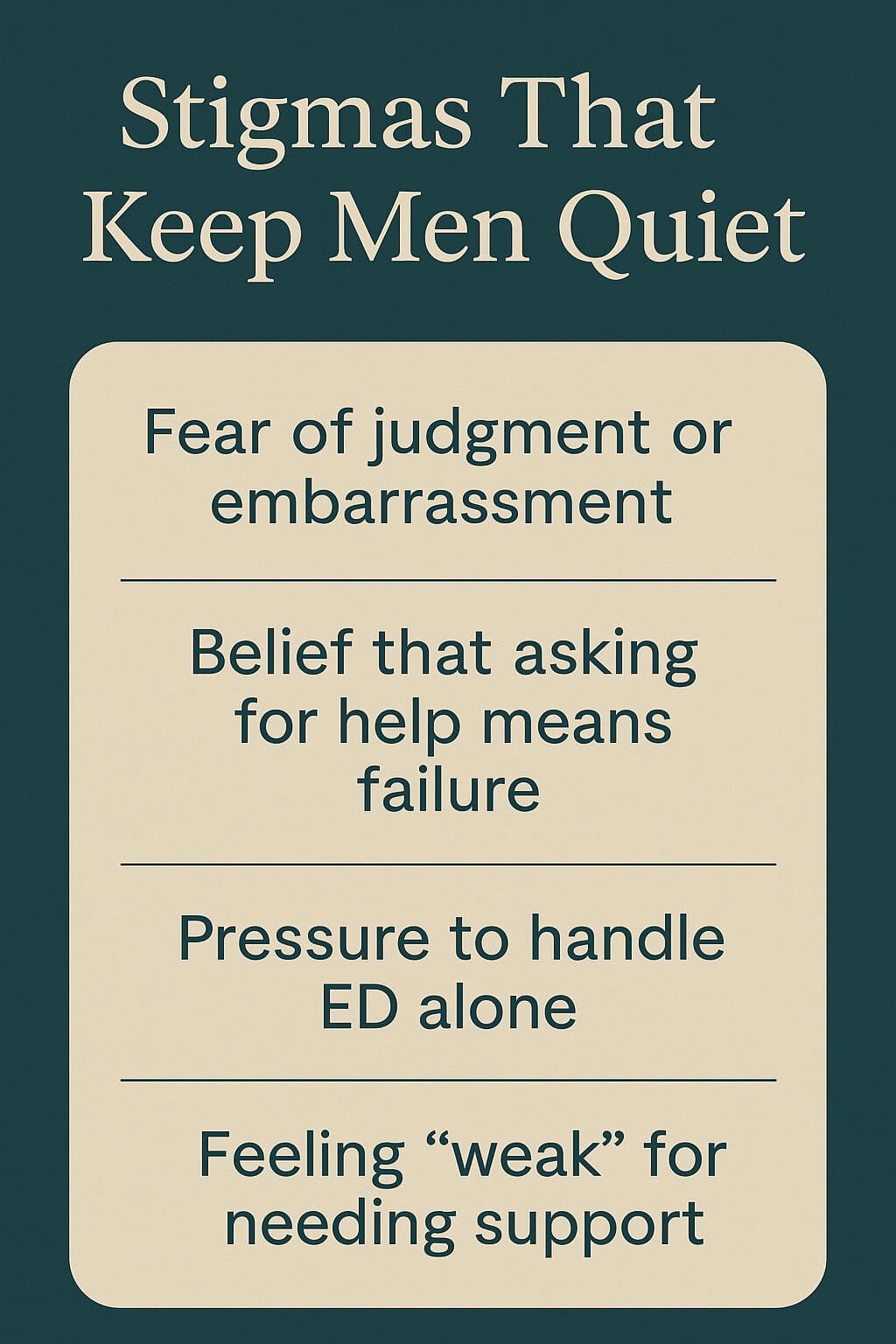
The Two Kinds of Stigma That Keep Men Quiet
1. Public Stigma
Fear of what others may think:
- “My doctor will judge me.”
- “My partner will think less of me.”
- “People might find out.”
Public stigma often leads to delaying care or avoiding it entirely.
2. Self-Stigma
Internal stories about what seeking help means:
- “If I need help, I’m failing.”
- “I should be able to fix this on my own.”
- “I’m weak for needing support.”
Self-stigma is often the heavier barrier. It keeps men second-guessing themselves or downplaying their symptoms.
Education Level Surprisingly Doesn’t Protect Against Stigma
One surprising research finding is that men with higher levels of education showed more avoidance when it comes to seeking psychological help for ED.
Why might this be?
Men with higher education may:
- Feel extra pressure to appear competent
- Value self-reliance more strongly
- Believe they “should” solve problems themselves
- Fear the vulnerability of not being in control
This insight highlights something important: shame around men’s sexual functioning affects everyone. Even men who seem confident or successful may be carrying shame they rarely speak aloud.
Why Avoiding Help Makes the Problem Worse
When ED activates shame, and shame leads to silence, a painful cycle begins:
ED occurs →
Shame increases →
Avoidance grows →
Anxiety rises →
ED becomes more likely in the future
This cycle is powerful, but it’s not permanent. Reaching out for support — even once — can interrupt the pattern and open space for relief.
What Helps Men Overcome Help-Seeking Stigma
Men begin reaching out when they feel:
- Safe
- Seen
- Not judged
- Respected
- Informed
- Less alone
It also helps to know:
- ED is one of the most treatable sexual concerns.
- Psychological factors matter, and therapy can address them without pressure or shame.
- Working with a therapist who understands masculinity and sexual functioning can help shift the internal messages that have been holding you back.
For a related perspective, you may find it helpful to explore our blog on navigating shame and self-criticism.
You Don’t Need to Carry This Alone
Reaching out for support isn’t about being “weak” —it’s about choosing connection and relief over shame and isolation.
Asking for help doesn’t diminish your masculinity. It expands your capacity for connection, confidence, and emotional freedom.
If you’re curious about beginning therapy, our clinicians at The Catalyst Center offer compassionate, confidential support for men navigating erectile dysfunction, anxiety, and the pressures of masculinity.
Men’s Mental Health Stigma Is Real — and You Deserve Support
Healing begins not when you “figure it out” alone, but when you allow yourself to be human. Seeking help is not a sign of weakness. It’s a step toward relief, wholeness, and a healthier relationship with yourself.
Ready to get started?
If you’re feeling the weight of these experiences, you don’t have to navigate them alone. Our men’s mental health team at The Catalyst Center is here to offer support with compassion and respect. Reach out if you’d like to learn more or explore therapy at your own pace.