

Collaging as a Gentle Way to Reflect and Set Intentions
As the calendar turns, many people feel a quiet pull to reflect — not necessarily to overhaul their lives, but to notice what they’re carrying forward and what they may be ready to release. For some, traditional New Year’s resolutions feel rigid or overwhelming. Creative practices like collaging offer another path.
Collaging is a simple, image‑based process that invites curiosity instead of pressure. By working with pictures, textures, and symbols, it creates space to listen inward and notice what matters — often before we have words for it. At The Catalyst Center, we see how expressive practices like this can support reflection, healing, and self‑trust in a gentle, accessible way.
Why Collaging Can Be Therapeutic
Collaging engages both creativity and reflection at the same time. Because it relies on visual elements rather than language alone, it can access emotional and nervous‑system processes that traditional talk therapy sometimes can’t reach right away.
In our work, we see people use collaging to:
-
Explore emotions that feel difficult to name
-
Process grief or major life transitions
-
Sit with uncertainty or complex decisions
-
Increase self‑awareness and self‑compassion
Often, meaning emerges gradually. Patterns, themes, or feelings may only become clear after stepping back and viewing the collage as a whole. Because of this, the practice is less about creating something “good” and more about allowing discovery to unfold.
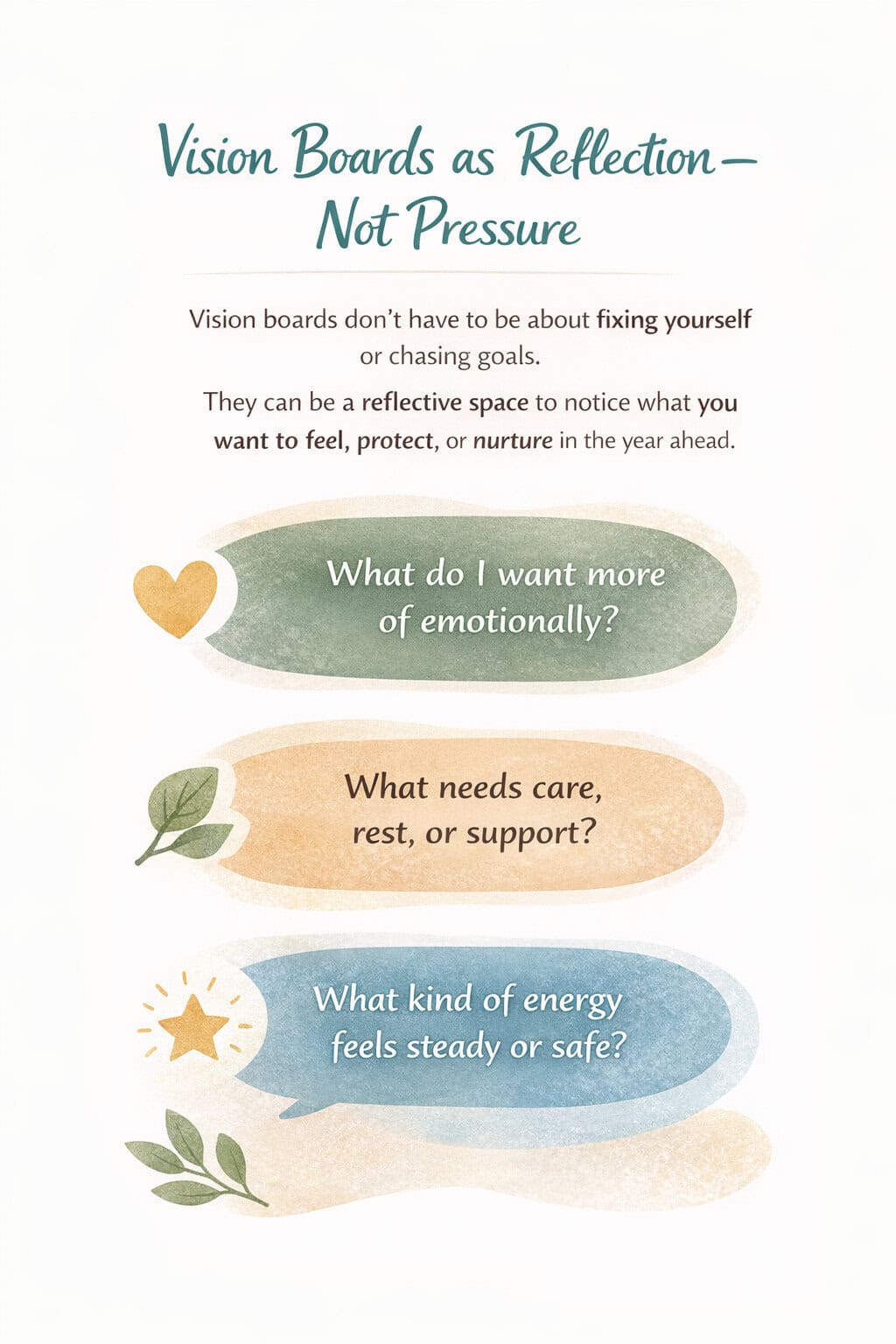
Vision Boards as Reflection — Not Pressure
Vision boards are often associated with productivity or achievement. However, they don’t have to be about hustle, fixing yourself, or striving for a particular outcome. When approached thoughtfully, they can become a reflective practice rooted in care.
As you collage with the New Year in mind, you might gently ask:
-
What do I want more of emotionally this year?
-
What kind of energy do I want to move toward?
-
What parts of myself need attention, rest, or support?
Rather than forcing clarity, collaging allows insight to arise organically. For many people, this feels safer and more authentic than setting rigid resolutions — especially during seasons of fatigue, grief, or transition.
Collaging Through Grief, Change, and Inner Complexity
Collaging can be especially supportive during times of loss or uncertainty. When life feels fragmented, creating an image‑based narrative allows multiple emotions to coexist without needing immediate resolution.
We often see how collaging gives space for different internal experiences to sit side by side — joy and sadness, fear and hope, certainty and doubt. This mirrors what trauma‑informed approaches emphasize: witnessing rather than fixing.
Over time, this kind of visual witnessing can help people feel more whole and less at odds with themselves, even when answers remain unclear.
How to Begin a Collaging Practice
You don’t need artistic skill or special supplies to begin. In fact, simplicity often makes the process feel more approachable.
To get started, gather:
-
Old magazines or newspapers
-
Printed images, photos, or stickers
-
Scissors and glue
-
A journal page, poster board, or sturdy paper
Set aside some quiet time. As you flip through images, notice what draws your attention. Try not to overthink your choices. Instead, let curiosity lead.
Afterward, you might reflect or journal about what you notice — recurring themes, emotional responses, or surprises. Some people also find it helpful to revisit their collage days or weeks later to see what continues to resonate.
Integrating Collaging Into Therapy or Self‑Care
 Collaging can be meaningful on its own or alongside therapy. Within therapy, expressive practices can help clients access insight safely and creatively. Outside of sessions, collaging can support ongoing self‑connection and emotional regulation.
Research on expressive arts approaches suggests that creative practices can reduce stress, support emotional processing, and build resilience. What matters most is not doing it “right,” but allowing the process to be honest and supportive.
A Gentle Reminder
Your collage doesn’t need to make sense to anyone else. It doesn’t need to be optimistic, organized, or complete. What matters is that it reflects something true for you.
As you create and reflect, you may notice small but meaningful shifts — moments of clarity, self‑recognition, or relief. Over time, these moments can strengthen trust in your own inner knowing.
Ready to get started?
If you’d like support exploring creative and expressive practices within an affirming space, our experienced therapists at The Catalyst Center is here to help. Reach out anytime to learn more or schedule a consultation.