

Masculinity and Sexual Health: How Cultural Messages Shape Men’s Intimacy
Many men feel pressure to “perform” during sex — to always be ready, always strong, always confident. But beneath that pressure lies a deeper truth: sexuality is vulnerable, relational, and profoundly human. When cultural expectations collide with real-life experiences, many men feel confused, ashamed, or alone.
The more men conform to traditional masculinity norms, the more likely they are to struggle with sexual intimacy and avoid help when they need it most.
This blog explores how masculine conditioning shapes sexual health — and how you can begin unlearning what no longer serves you.
Where Do Our Ideas About Sex Come From?
Most men never receive healthy, realistic sex education. Instead, they learn from:
- Media
- Pornography
- Peers
- Cultural norms
- Family beliefs
- Stories about what “real men” do
These influences create sexual scripts — internal blueprints about how sex “should” unfold. Many of these scripts are unrealistic, performative, or disconnected from emotional intimacy.
Common Masculinity-Based Sexual Scripts:
- “A real man can always get an erection.”
- “Men don’t get nervous about sex.”
- “Sex is about performance, not connection.”
- “Men should have lots of partners.”
- “Emotions don’t belong in the bedroom.”
When your lived experience doesn’t match these scripts — which is true for every man at some point — shame often rushes in.
How Masculinity Norms Influence Sexual Anxiety
Research has identified several cultural masculinity norms that can influence sexual anxiety:
- Dominance
- Emotional control
- Sexual prowess
- Self-reliance
- Risk-taking
When these norms become rigid, they create tremendous pressure. During sexual experiences, this pressure can activate:
- Performance anxiety
- Self-evaluation
- Fear of disappointing a partner
- Fear of losing status or masculinity
- Shame around vulnerability
And because arousal relies on relaxation, safety, and presence, pressure becomes the enemy of pleasure.
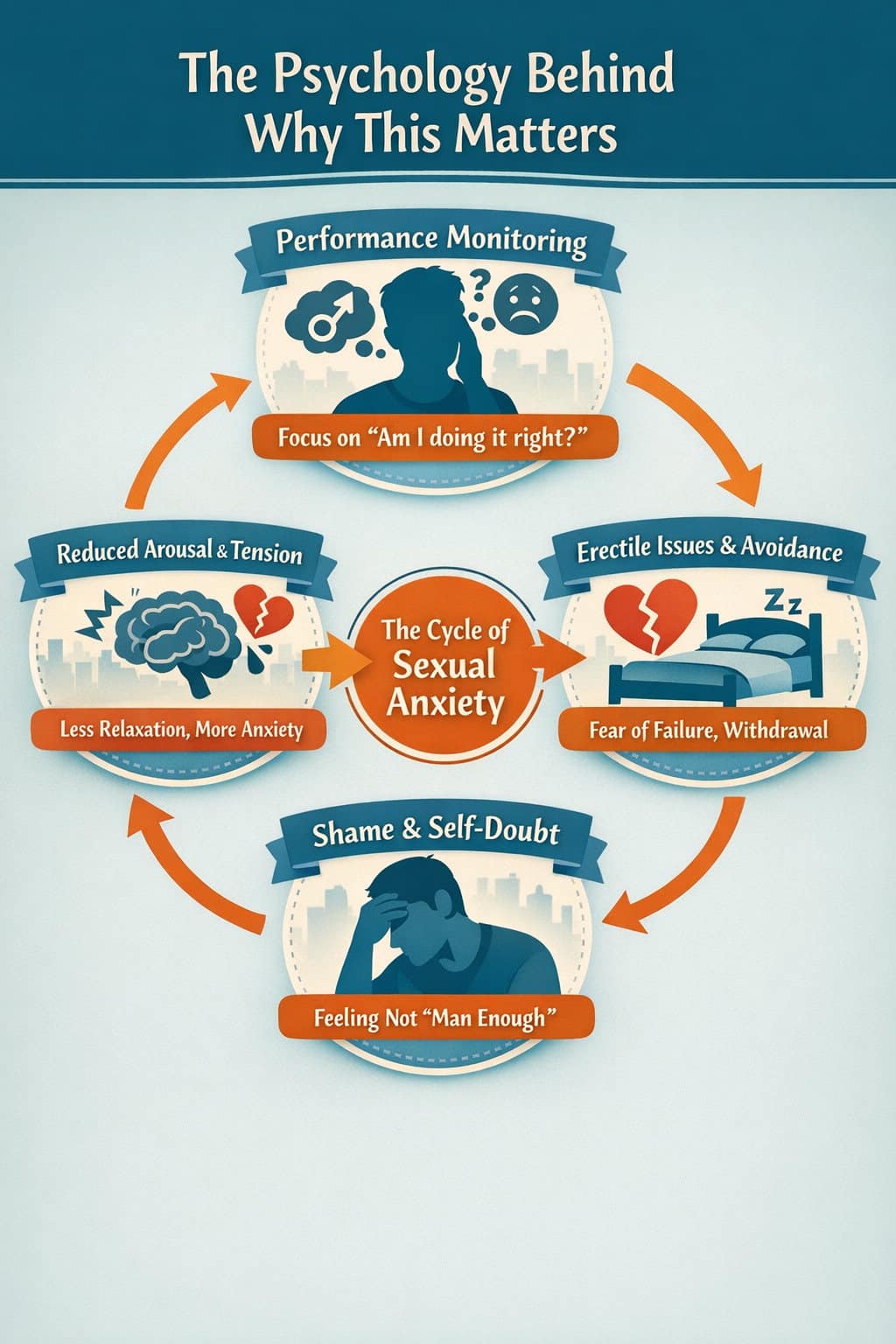
The Psychology Behind Why This Matters
Cognitive models of sexual functioning show that when men monitor their performance — worrying about their erection, their partner’s perception, or their masculinity — their attention shifts away from pleasure.
This leads to:
- Less arousal
- More tension
- Increased likelihood of ED
- A cycle of fear and avoidance
It’s not weakness. It’s cognitive load.
Healing Begins with Understanding — Not Judgment
Healthy masculinity isn’t measured by performance —
It’s built through presence, communication, and emotional openness.
Therapy can help you:
- Identify unhelpful sexual scripts
- Reduce performance-based thinking
- Explore healthier, more flexible expressions of masculinity
- Strengthen emotional connection with partners
- Rebuild internal safety
You deserve a version of sexuality rooted in authenticity — not cultural pressure.
Redefining Masculinity in Sexual Relationships
Healthy masculinity includes:
- Vulnerability
- Presence
- Communication
- Curiosity
- Emotional openness
These qualities deepen intimacy and reduce anxiety, creating the conditions where sexual experiences can unfold naturally.
Conclusion: Masculinity and Sexual Health Can Coexist
The good news is this: your sexuality doesn’t need to be weighed down by outdated cultural scripts. When you begin exploring your own beliefs with compassion, you open space for confidence, connection, and genuine pleasure.
If you’re curious about working with a therapist who understands the intersection of masculinity and sexual health, our team at The Catalyst Center is here to support you.
Ready to get started?
If cultural pressure has made intimacy feel stressful or confusing, you don’t have to navigate that alone. Our trauma-specialist therapists at The Catalyst Center support men in exploring sexuality with curiosity, compassion, and care. Reach out when you’re ready.