When the New Year Feels Heavy Instead of Hopeful
It’s been a tough year for many, and perhaps it has been for you too. After the holidays, weariness often sets in. Nights remain long, days stay short, and family gatherings come and go.
Often, what lingers are unmet longings or quiet disappointments that commercial cheer cannot soothe. Attachment wounds may be stirred. Doom scrolling, overworking, or family conflict can become ways we numb pain rather than tend to it.
In these moments, part of you may long for rest, while another insists you keep going.
Winter as an Invitation, Not a Deadline
New Year’s is often framed as a time for reinvention. However, winter itself offers a different rhythm. The Winter Solstice has passed, and although we can’t see it yet, the light is slowly returning.
At the same time, winter invites hibernation. It asks us to replenish rather than perform. Growth, after all, begins underground.
Yet letting go can feel threatening. Many identities form around survival, productivity, or caretaking. Still, as Feng Shui wisdom reminds us, releasing old ego supports creates space for something new to emerge.
Letting Go Isn’t Loss — It’s Making Space
Letting go does not mean abandoning what matters. Instead, it means releasing what no longer serves your essence.
Internal Family Systems Therapy (IFS) reflects this truth clearly. As a constraint-release model, IFS begins with a powerful premise: wholeness, goodness, clarity, and connection already exist within you.
Rather than fixing yourself, the work involves gently clearing what blocks access to who you already are.
According to the IFS Institute, Self energy is calm, compassionate, confident, and capable. When Self leads, change happens organically.
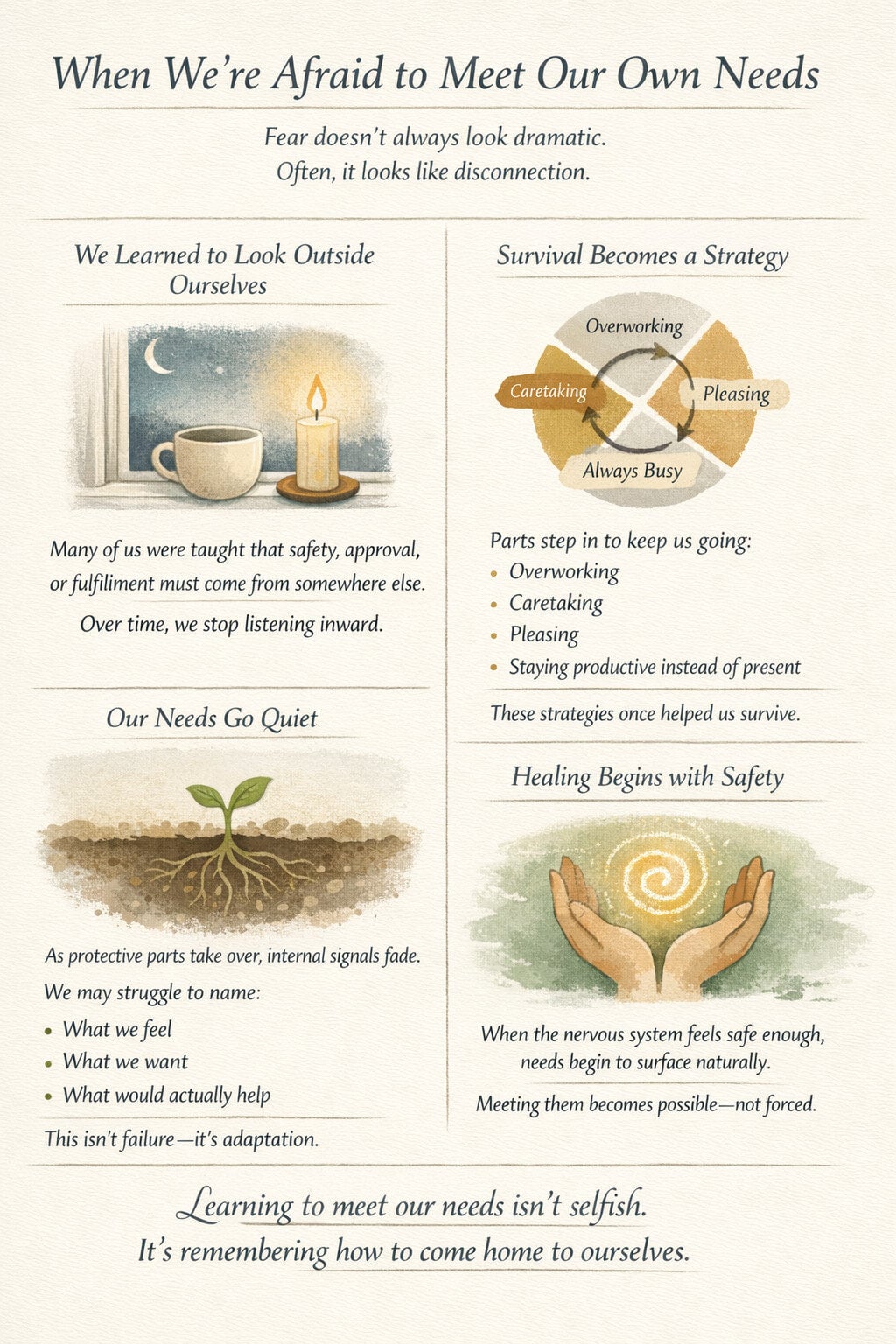
When We’re Afraid to Meet Our Own Needs
In my work with couples, a familiar pattern emerges. Partners often say their needs are not being met. Beneath that pain, however, is frequently a deeper fear: What if I can’t meet my own needs either?
Living in a culture that prioritizes external solutions and achievement, many internalize the belief that fulfillment must come from outside. As a result, we remain locked in patterns that disconnect us from ourselves and from one another.
You might recognize these thoughts:
- “I’m successful, but I’m not happy.”
- “My partner and I fight, and intimacy feels distant.”
- “I’m exhausted and always trying to please.”
Eventually, a deeper question arises: Is it possible to feel calm and confident within myself?
Living From Love Instead of Fear
Internal Family Systems therapy isn’t about fixing yourself —
It’s about learning to listen inward, with compassion, clarity, and trust.
Most people answer that question with a cautious yes, followed by but how?
How do we calm internal chaos? How do we respond rather than react? How do we live from love instead of fear?
IFS offers a gentle path forward. Rather than imposing solutions, it helps calm nervous system activation from the inside out. Over time, protective parts learn they no longer have to work so hard.
As this unfolds, a deep internal connection develops. This connection soothes and nourishes. With it often comes confidence, compassion, and moments of peace that do not rely on external validation.
IFS Therapy and Trauma Healing
In this season of darkness, there is real hope. Internal Family Systems therapy helps release cognitive, emotional, and physical constraints that limit aliveness.
Importantly, this is not a therapist telling you what to do. Instead, it is a process of reconnecting with the Self within — the part of you that already knows how to heal.
Somatic listening plays an essential role. Rather than forcing insight, IFS allows the body and nervous system to lead. When parts release inherited family and cultural burdens, trust returns. Life begins to feel meaningful again.
Because of this, IFS is increasingly recognized as an effective trauma-healing modality, especially for attachment repair and nervous system regulation.
A Threshold Moment
If you feel lonely, confused, or quietly lost, you may be standing at a threshold moment. These moments do not require a finished vision. Instead, they ask for presence.
IFS helps clients:
- Clear internal constraints to access the spark that says, yes, this wants to be born
- Gently uncover inherent desires, values, and uniqueness
- Gain clarity about aligned action steps
- Experience Self-led energy with greater ease
- Renew parts that have been dormant and afraid to move
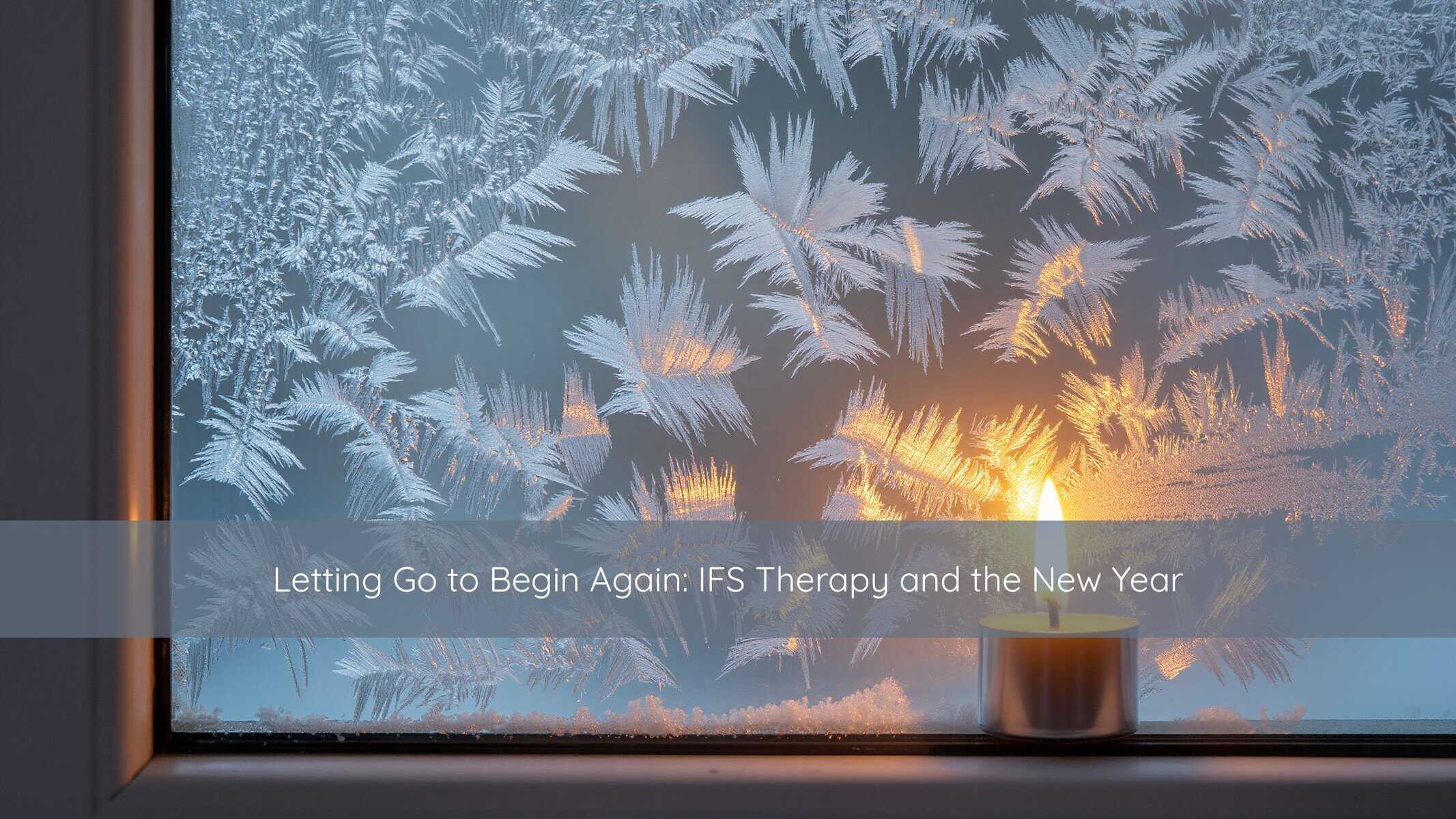
Like a flame in winter darkness, this spark does not need to prove anything. It only needs tending.
Tending the Flame This Winter
During winter, healing begins with listening rather than striving. It begins with a flame, not a finished plan.
IFS supports learning how to protect and nurture your essence in new ways. As you do, direction and meaning emerge naturally. Like a light in the darkness, tending your inner flame helps you find your way forward.
This New Year, consider welcoming what wants to live through you.
Gentle Reflection for the Moment
Rather than making a resolution, reflect gently:
- What feels alive in me right now, even in a small way?
- What would it mean to tend this flame without asking it to prove anything?
Ready to get started?
If you’d like support during this season of transition, our trauma-specialist team at The Catalyst Center is here for you. Reach out to learn more or schedule a complimentary consultation when it feels right.