

Holidays, Depression, and Sacred Presence
The holidays often arrive with a particular kind of weight. For many of us, holiday stress and depression live quietly beneath the lights, gatherings, and expectations. What if this season is not asking us to fix ourselves, but instead to return to our own sacred presence?
When Willpower Becomes Too Harsh
I begin here with a quote from John O’Donohue, shared by Jeanne Catazaro in Unburdened Eating:
“Too often people try to change their lives by using the will as a kind of hammer to beat their life into proper shape… This way of approaching the sacredness of one’s own presence is externalist and violent… You can perish in a famine of your own making.”
So often, people sit with me and ask, “But how do I fix it?” Insight matters. Understanding matters. Still, what is usually being asked is simpler and harder: How do I stop feeling this way?
During the holidays, that question can feel especially urgent.
The Weight of the Season
This time of year, I find myself riding the waves alongside many others—clients, friends, and people I love. There is so much pressing in at once. The state of the world. The state of our country. Climate change, and the strange weather patterns it brings. Here in Colorado, some of us are praying for snow.
There are family expectations, gift giving, and food. So much food.
Holiday culture emphasizes brightness, abundance, and activity. Bigger gatherings. More lights. Fuller plates. Yet long before Western culture reshaped these traditions, this season was about something quieter. Hope. Love. Gratitude. Peace. Stillness. Mystery.
If you are struggling, these quieter qualities may be what your system is longing for most.
The Darkest Time of the Year
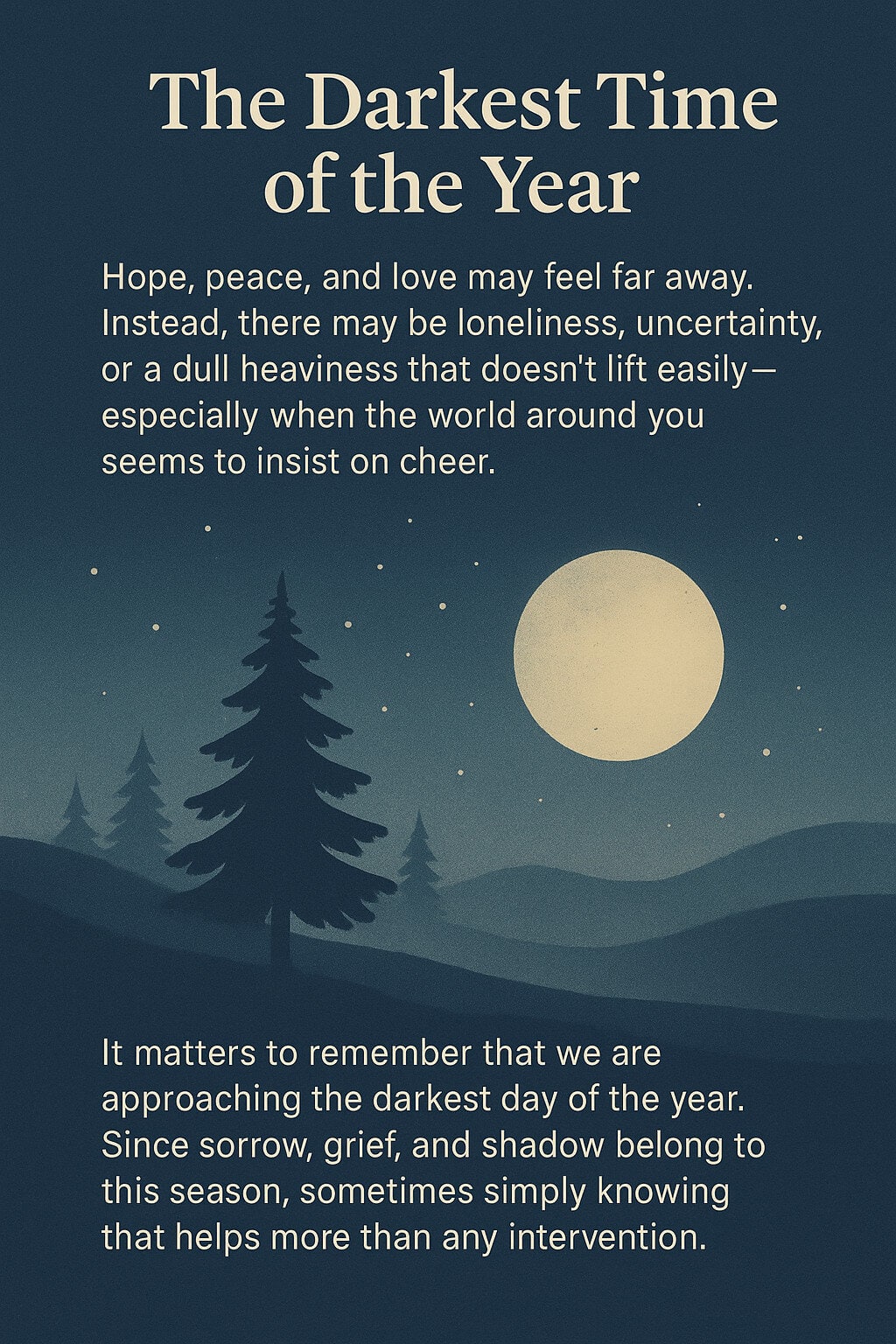
You may be noticing that hope, peace, and love feel far away. Instead, there may be loneliness, uncertainty, or a dull heaviness that doesn’t lift easily—especially when the world around you seems to insist on cheer.
It matters to remember that we are approaching the darkest day of the year.
Several Decembers ago, during a period of deep depression, my therapist looked at me and said, “Well, it is the darkest time of the year after all. Perhaps you could try bringing it closer instead of pushing it away.”
That moment shifted something in me.
Since then, I’ve learned to recognize that sorrow, grief, and shadow belong to this season. Sometimes simply knowing that—allowing it to be true—helps more than any intervention.
Creating Containers for What Hurts
Rather than pushing difficult feelings away, I often invite people to create containers for them. Winter is about holding, hibernating, and preparing for what will come next by letting go.
This is not about fixing yourself from the outside. It is about coming home.
For Anxious and Critical Thoughts
Instead of fighting anxious thoughts, try asking them for a little space.
During my daughter’s chemotherapy treatment, I once lay down for a nap feeling overwhelmed by worry. My thoughts were relentless. In my mind, I asked that worried part of me to sit on the headboard while I slept.
Something softened. I felt space. Peace settled in and around me. I slept deeply and woke feeling grateful. I thanked that part for stepping back.
You might also place a small bowl or jar by your bed. Before sleep, place your worries there, trusting they can wait until morning.
For Grief and Deep Sorrow
Light a candle before bed. Let the room be dark. Turn toward your breath, perhaps counting five in and five out.
As you breathe, imagine yourself held by the rhythm of your breath, inside and all around you. Write down any fears that accompany your grief. Fold the paper and place it under your pillow or somewhere safe.
Let the parts of you that carry fear know that you are with them.
If you are able, take a walk at dusk or after dark. Notice the silhouettes of trees, the moon, the stars, and the cold air. Feel the ground beneath your feet. Allow loss to be present without trying to change it.
Music for Loneliness and Rest
You may also find companionship in music that honors heartache, loneliness, or the need for rest. Let sound become another way of being held. Attend a concert, sound bath or pick up an instrument. Make a favorite playlist that mirrors the parts of you that want to be heard and held.
Eating and Coming Back Inside
When it comes to eating, you might try not doing or saying the thing that pulls you outside yourself, even briefly.
Often, binge eating protects us from feeling something underneath. When you pause, those feelings may surface. When they do, listen. Welcome the part of you that feels this way. Offer kindness. Ask critical voices to soften.
Let your body and soul rest in being met by your own attention.
Presence Changes the Experience
On The One Inside podcast, Jim Abrams spoke about IFS and despair. He said we are not asking parts to be hopeful. We are asking the system to bring comfort and connection so that the experience itself changes.
When we are present with ourselves in grief, something shifts. Sacred presence does not erase pain. It changes how we are with it.
Returning to Yourself
This holiday season, when anxiety, sadness, or loneliness arise, pause if you can. Return to yourself. Let what is here be here, without explanation or story.
Winter is not asking you to shine. It is asking you to be real.
Ready to get started?
If you find yourself wanting support as you move through this season, help is available. You’re welcome to reach out to The Catalyst Center when and if it feels right for you.